



New York Publishing has lost its soul, said Ted Gioia last week on his Substack, The Honest Broker. Gioia, one of my favorite Substackers, laments the decay of originality in the publishing industry, pulling up an assortment of books with virtually identical covers:
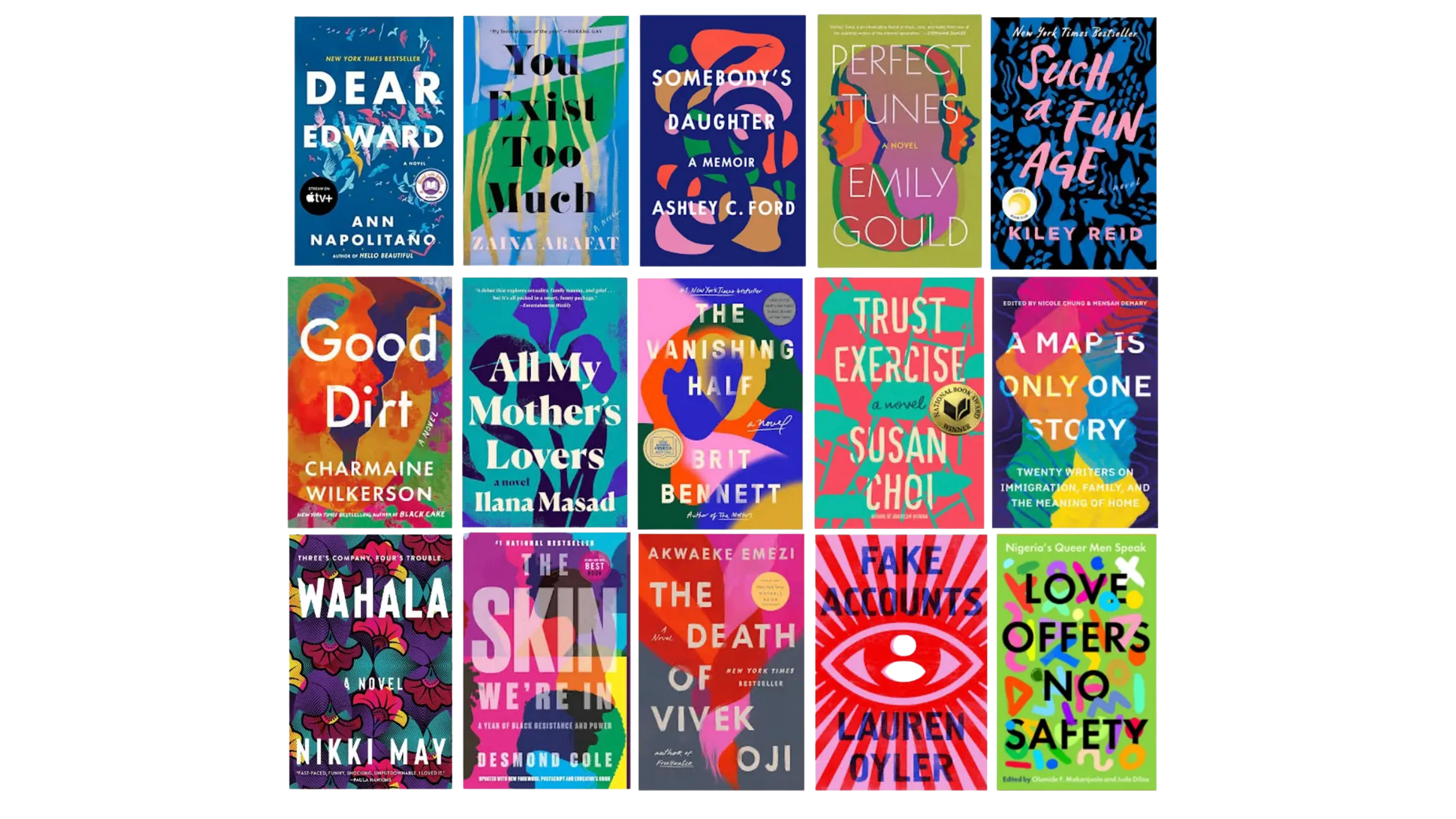
But it’s not just the covers, Gioia says. The stories are nearly identical as well. Publishers “keep returning to proven formulas” because they’re afraid of taking risks.
Gioia attributes this risk aversion in publishing to the gradual consolidation of many small publishing houses into one giant publishing conglomerate—and he’s not wrong. I’m old enough to remember, for instance, when Random House and Penguin were two separate entities. “When Random House was a tiny independent company,” Gioia writes, “it could make a tidy profit by publishing books that sold just ten thousand copies. But when you’re part of a billion dollar corporation, those books don’t move the needle—you need something bigger and splashier.”
Gioia’s analysis is crystal clear. Publishing today is profit-driven, which stifles originality. Large publishing houses don’t want to take risks on books that don’t follow a prescribed formula because it’s impossible to predict sales trends from something completely new. Generally, I agree.
But there’s a missing piece of the puzzle.
If publishing houses only published books they thought would make them money, then, presumably, they would be making money from the “garish” titles they push out every year. The problem, as Gioia himself admits, is that most published books today don’t actually make money—they don’t sell anywhere near ten thousand copies. In fact, according to this article from 2022, half of all books published by Penguin Random House reportedly sell fewer than twelve copies.
Read that again. Not Random Indie Press Number 472. Penguin Random House. Not twelve-thousand copies. Twelve copies.
Twelve.
I’m a business owner, so I know a thing or two about sales. When I first launched my business, for one, we heavily marketed a variety of services: career coaching, resume editing, tutoring, writing coaching, and college counseling. After several months of operation, we quickly found that of these five offerings, only the last service was making us real money, so we pivoted our business model to emphasize college counseling.
Any sane business owner will tell you that if something isn’t selling, the solution is not to double down on the same formula but to pivot to a new one. In fact, the very secret to entrepreneurial success is taking risks—and selling something that no one else is selling.
Because human beings are attracted to the idea of being special.
Therefore, I reject the premise that publishing is soulless and homogenous because of the evil profit machine. If publishers were at all concerned with making money like any normal business, they would a) take risks b) sign talent over tropes c) analyze gaps in the market and d) try something new. After all, the only way to make real money under a true capitalist system is to create something that no one else has created.
Instead, publishing has latched onto the exact opposite formula: it runs on trends and refuses to take risks. The reason publishing has “lost its soul” is precisely because it has lost touch with the very engine that keeps the capitalist system afloat: the people.
Simply put, publishers no longer publish books that people want to read. Instead, they publish books that MFA students want to read—and as a result, these books never exit MFA circles.
The true culprit, then, is not the profit model of the publishing industry but the insularity of New York MFA and publishing circles. And the fact is that few MFA students and publishing professionals have ever read a novel that does not follow “MFA rules.”
To illustrate what I mean, I’d love to present a personal anecdote from this past week that clued me into exactly what’s going on in publishing today.
I recently started sending out my latest novel, Blue Snow, to literary agents. The novel directly channels three great literary works—The Catcher in the Rye, Notes from the Underground, and Pale Fire. Now, if you’ve read any of these books, you’ll know that nothing supposedly “happens” in them—on the surface, at least; rather, all three novels run on psychological depth and writing style (or “voice,” as literary agents like to call it). This is an intentional choice on the part of Salinger, Dostoyevsky, and Nabokov—and it’s part of the reason that we still read these novels today.
In my first round of agent queries, therefore, I sent out a draft that’s deliberately structured in the vein of Catcher—like my idol T.S. Eliot, I believe that all literature should be in dialogue with the broader literary tradition. A serious literary reader should thus quickly pick up on the Catcher echo, becoming immediately susceptible to the novel’s themes. Like Catcher, Blue Snow is a frame narrative recounted from a therapy room, with the action or “story” being told in retrospect. And like Holden, my protagonist does not want to let on to what’s really bothering her in the first few chapters because she is psychologically avoidant; instead, she goes on a series of seemingly unrelated tangents that later become central to the main plot. The same can be said of the Underground Man, who does not disclose precisely how or why he has ended up a recluse—and we do not need to be told because, by the time we’re done reading through his meditations, we already know.
In the original version of my novel, therefore, digression and deliberation were at the heart of the book’s literary and psychological architecture. The effect is that by the time you’re thrust into the main story, you look back on the first several chapters and feel unsettled—you know that something’s wrong with the protagonist, though you’re still not sure why. In the same way, you can look back on Kinbote’s introduction to John Shade’s Cantos in Pale Fire after reading through his notes to the poem and feel that something is off with his original characterization of Shade—though, of course, Nabokov never clearly lays out the “conflict” of the novel because that would be boring.
For lack of a better term, this sort of writing is cool.
Not for literary agents. Within a week of sending out my sample chapters, I started getting comments about how my narrator was too rambly and digressive, how the conflict is not clear enough, how the sentences are too long, and how there is not enough “action” and “narrative propulsion.” After three of these notes from agents and a weekend of ripping my hair out, I spent about fifty hours rewriting my introductory chapters by removing all digressions, swapping out internal monologue for “scenes,” clipping the length of my sentences, and cutting any sort of psychological asides.
In other words, I wrote a screenplay in novel form, resulting in chapters with less voice, less personality, and certainly less originality.
Within hours of sending out this new version, I received a request from a literary agent to see my full manuscript.
I bring up all of this as a wonderful example of what is happening today in the publishing industry. Publishing professionals are increasingly averse to digressive, introspective, and challenging writing because MFA programs don’t teach literature—they teach other watered-down MFA books.
The problem, then, is that an entire rich literary tradition has been substituted for one narrow, soulless aesthetic.
As a result, publishing professionals—literary agents and editors especially—seldom see literary fiction that does not follow the prescribed “MFA formula.” I have written elsewhere about the ills of “MFA writing” (or “MFA slop” as I like to call it), and it is no wonder that all books today not only follow the same formula but also sound exactly the same. Gravitating in the MFA world and often holding MFA degrees themselves, these agents glorify writing stripped of all embellishments; having never been exposed to non-MFA books, they label introspective literary writing as “rambling,” “digressive” or “too voicey.” In this way, they are like prisoners in Plato’s Cave, living perpetually with shadows of real literature while believing real literature to be unpalatable.
But is that necessarily their fault? In a society that tells us that an NYU MFA is the be all and end all of writing prowess, can we blame them for never looking beyond its cardboard teachings? After all, if you believe that “MFA writing” is the best of the best, then you will of course hold up all other writing to this stripped, soulless aesthetic. It is no wonder, then, that when presented with AI-writing, MFA students, who have been trained to write soulless, minimalist sentences their entire lives, actually prefer “clean” AI writing over messy human prose.
Furthermore, in an industry that demands that books be sold on the basis of “comp titles”—books that are similar to the book you are trying to sell—can we fault literary agents for only ever green-lighting one specific sort of writing and one specific sort of narrative engine?
Hell, open up any work of literary fiction today, and every single writer sounds the exact same because the publishing industry runs on sameness rather than difference.
New York publishing has lost its soul, but it hasn’t lost its soul because of profit and the capitalist machine. New York publishing has lost its soul because we have become unmoored from the literary tradition, trusting fast-paced gimmicks over books that require patience and introspection. No one reads contemporary literary fiction today because this sort of fiction is not written for a general audience—nor is it written for lovers of literature, as its name may suggest. The publishing industry prints books by MFA grads for MFA grads—and it is no wonder that these books never make it outside of those tiny circles.
But real literature isn’t about tidy sentences and hackneyed gimmicks. Real literature is about messy phrases that express the inner depths of human feeling and unexpected revelations of the human psyche. And the fact is that, contrary to popular belief, the masses like complex books that require us to think. After all, each of us is on a quest to find meaning in our own lives.
That’s precisely why we need real literature on our shelves—books that wrestle with frenzied protagonists and explore ideas unapologetically—rather than books with sterile sentences that have embraced nihilism over meaning.
If contemporary literary fiction feels lifeless, it’s not because readers no longer want literature. It’s because the publishing industry has turned its back to literature—and lost touch with the very chaos that makes us human.
Enjoyed this post? You can Buy Me a Coffee so that I’ll be awake for the next one. If you are a starving artist, you can also just follow me on Instagram or “X.”
Exactly. Jesus: Can we finally get some novels that represent real people? How about male novels that show mens' real experiences?
“MFA Slop” is the perfect descriptor. A few years ago, I decided to not read any authors with MFA in their bio. Simply pick up a book and you see those three letters, put it back down.