


If you want to know exactly what’s wrong with a culture, take a look at the literature it produces.
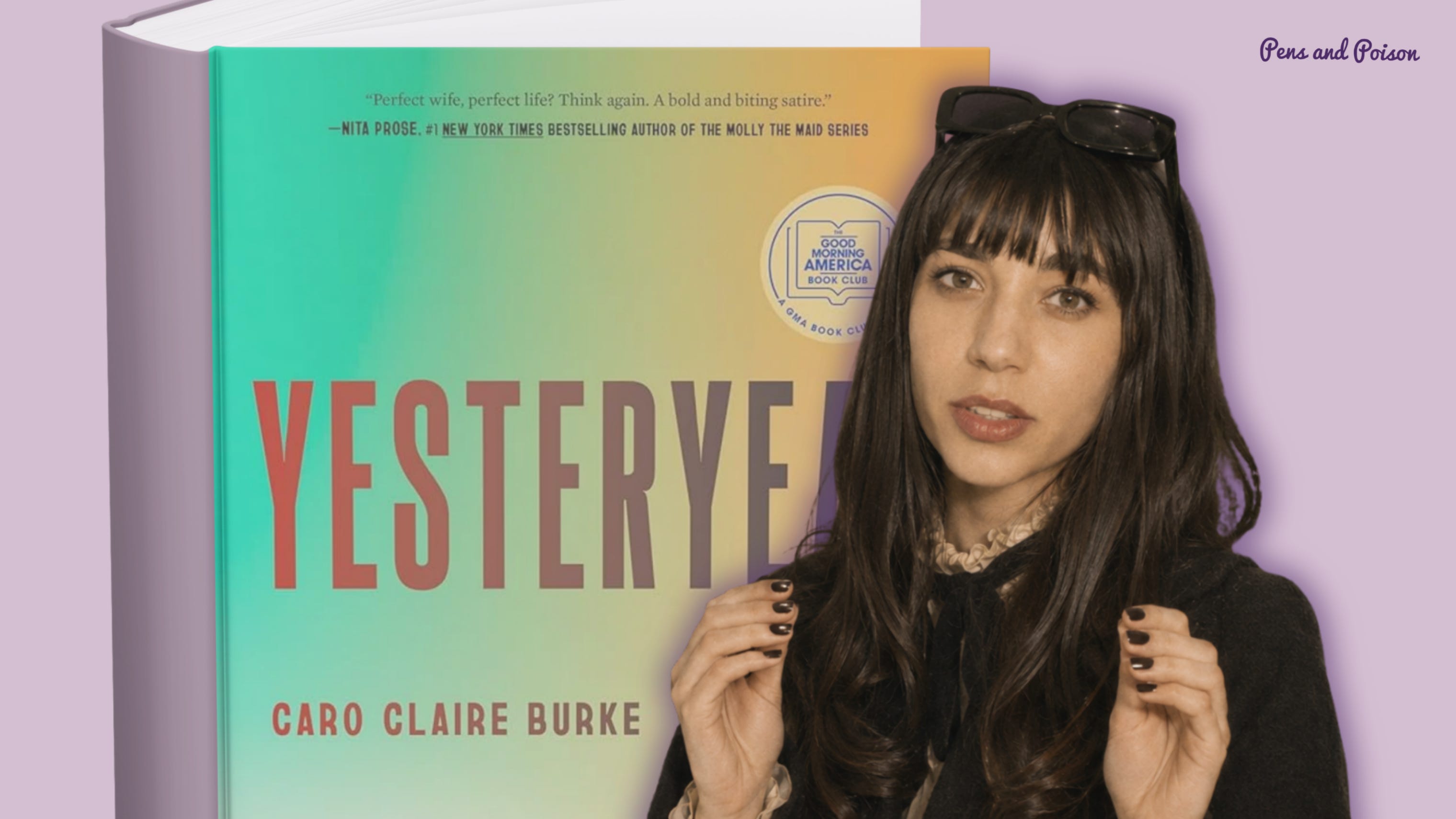
There has been one such artifact floating around the cultural stratosphere—Yesteryear by influencer Caro Claire Burke—and while I’d hesitate to call it “literature,” it exposes everything that’s wrong with both the contemporary publishing industry and our civilization at large.
Burke’s novel follows a “tradwife” influencer who travels back in time and wakes up in the 19th century—only to realize that the “perfect” life she’s been living isn’t as fulfilling as she’s always believed.
Given what we know about the leftist women who run the publishing industry, you don’t really need to read the book to extrapolate its exact message, but out of curiosity (and a naive willingness to give ideologues the benefit of the doubt), I decided to read the first several chapters.
And, boy, were all of my assumptions wrong.
Yesteryear defied my expectations in the worst possible way: it was somehow even more inaccurate, judgmental, and ludicrous than I could have conceived in my wildest dreams.
Let’s take a look at the first page.
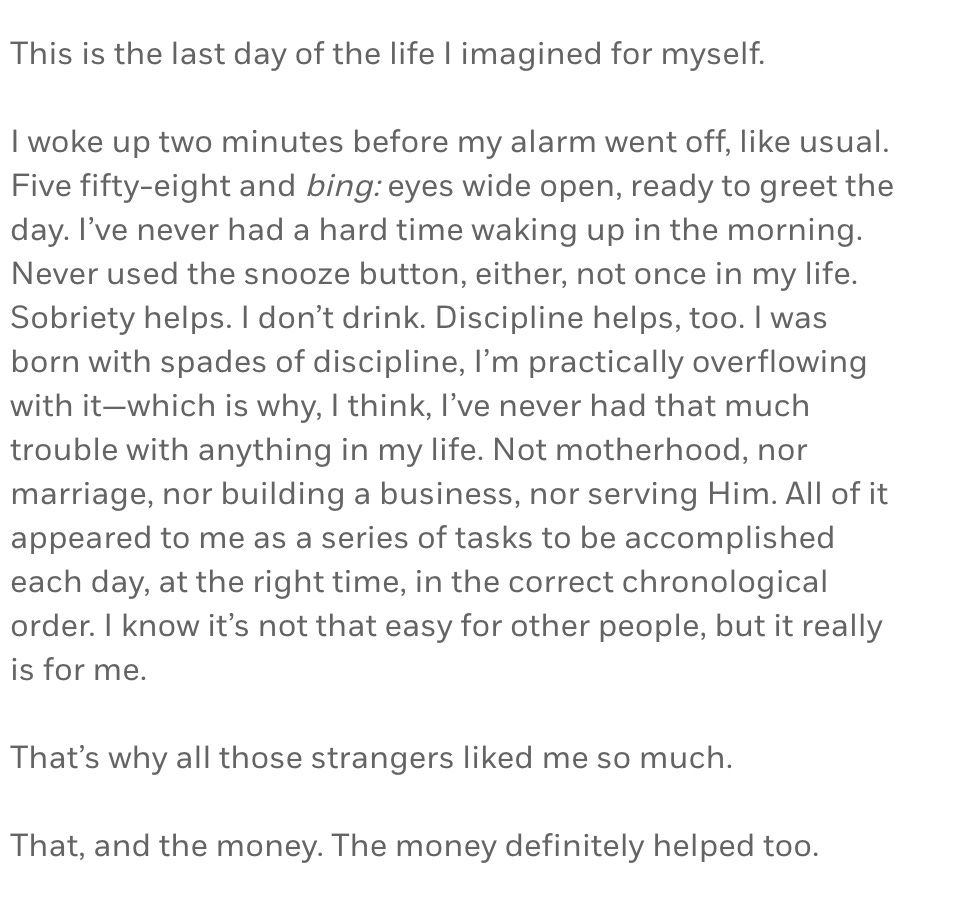
Burke’s “satire” is clumsy at best. Before we see our protagonist, Natalie Heller Mills, make a single meaningful decision, we’re told—through a self-righteous monologue—that she’s disciplined, sober, and effortlessly successful; motivated by material gain, she looks down on anyone who doesn’t embody her values.
While such a setup could be intriguing, there’s only one problem—no human being on the planet thinks this way.
In order to pull off a successful internal monologue, one must study the basic tenets of human psychology. Take Dmitri Karamazov from The Brothers Karamazov, for one. Dmitri is the last person we’d think of as a saint, and he often comes up with the most off-putting defenses for his poor life choices. Nevertheless, he possesses a basic self-awareness that makes him not only sympathetic but believable as a character.
Yesteryear’s Natalie, on the other hand, exhibits no such depth. Reduced to a list of assumptions about a given archetype, she comes off less as an individual consciousness and more as a direct embodiment of Burke’s own prejudices. And while it is true that one might expect a satirical novel to contain a greater number of over-the-top characterizations than a “serious” social critique in the vein of The Brothers Karamazov, an effective work of satire must nevertheless retain a degree of artistic subtlety. Pride and Prejudice’s ever-so-frivolous Mrs. Bennet, for instance, leaps right off the page; likewise, London’s “bright young things” in Evelyn Waugh’s Vile Bodies are every bit as psychologically convincing as they are ridiculous.
Put simply, the best satirists effectively humanize their targets.
Not so in Yesteryear. Burke’s writing has zero subtlety—and it is clear that she has done zero research on the values of the conservative Christians she’s set out to mock.
One might excuse Burke if she had merely written a sloppy opening paragraph, but the morally self-righteous tone continues for pages on end:
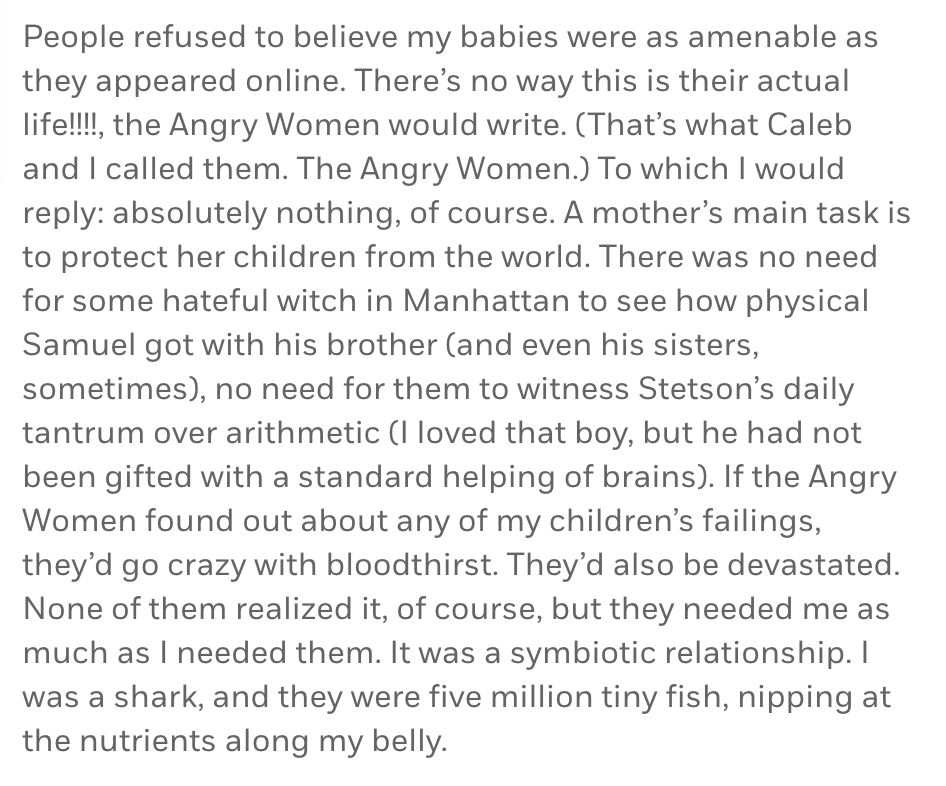
One is tempted to write Natalie off as an ideological construct rather than a character in her own right. Everyone outside of her immediate circle becomes an absurd caricature—”the Angry Women,” “some hateful witch in Manhattan,” the people “crazy with bloodthirst”—and throughout it all, Burke can’t help but continually point out the supposed shortcomings of “tradwife” parenting. Natalie’s asides, after all, are so obviously written through the lens of the author rather than through the eyes of our protagonist that one is tempted to dismiss the entire novel as a second-rate manifesto.
By the end of the first chapter, it becomes painfully obvious that Burke has never once meaningfully interacted with the sort of person she means to satirize, and therein lies the biggest problem with her critique: Burke is only capable of presenting a series of cardboard villains because she refuses to acknowledge that her political opponents are human, too.
One is left, therefore, to characterize Burke’s novel as revolting and despicable. Sure, the “tradwife” life isn‘t for everyone—trust me, I’m certainly no conservative Christian—but one cannot deny that many women who do become stay-at-home mothers report feeling more fulfilled than ever. To portray conservative women as power-hungry grifters devoid of self-awareness is not only grossly inaccurate but mind-numbingly evil.
One can only hope that Yesteryear—like many other contemporary “literary” novels examining hyper-specific contemporary problems from hyper-specific contemporary angles—will disappear into the sands of time like the might of King Ozymandias. But the fact that Yesteryear has caused quite a national storm over the past few months raises a far more interesting question than whether Burke can write believable characters (she can’t): why was this particular story—with its one-dimensional ideals and insufferable writing style—given so much attention in literary circles?
The answer, of course, has less to do with Yesteryear’s objective literary merit and more to do with the ideology embedded in its pages.
I can almost guarantee, in fact, that if someone had written a novel with a similar one-dimensional caricature of a radical leftist, the entire literary world would be losing it as we speak. We’d be seeing thinkpieces right and left about how the author is “dehumanizing political opponents by reducing them to ideological caricatures,” how the novel is “a shallow culture-war screed masquerading as literature,” or how the writing style itself is “artistically bankrupt.”
We can speculate, of course, about what such a reaction might look like, but we might never know for certain because the publishing industry would never allow such a novel to reach our shelves in the first place.
Literary agents and editors alike have declared an industry-wide boycott on stories with traditional sensibilities, blacklisting everything from “conservative leaning books” and “dated ideals of relationships” to “love triangles” and “‘clean’ romance.” While any one of these exclusions might seem innocuous in isolation, when dozens of gatekeepers begin rejecting the same sorts of books for the same ideological reasons, these biases permeate the editorial practices of an entire institution.
In other words, when enough gatekeepers create similar laundry lists of topics they don’t want to read about, an entire literary culture becomes intellectually homogenized.
If the vast majority of agents, after all, decide that they don’t want to represent stories about religion, then it becomes virtually impossible for an author writing positively about religion to get his or her book on the market, effectively boycotting that topic from the entire industry—and from the carefully curated books that get delivered to the shelves of your local bookstore.
But how bad is the problem, really?
I analyzed trends across 14 “Anti-Manuscript Wish Lists” from literary agents and editors, and the results are both illuminating and disturbing.
Here are the lists I hunted down from various corners of the Internet:
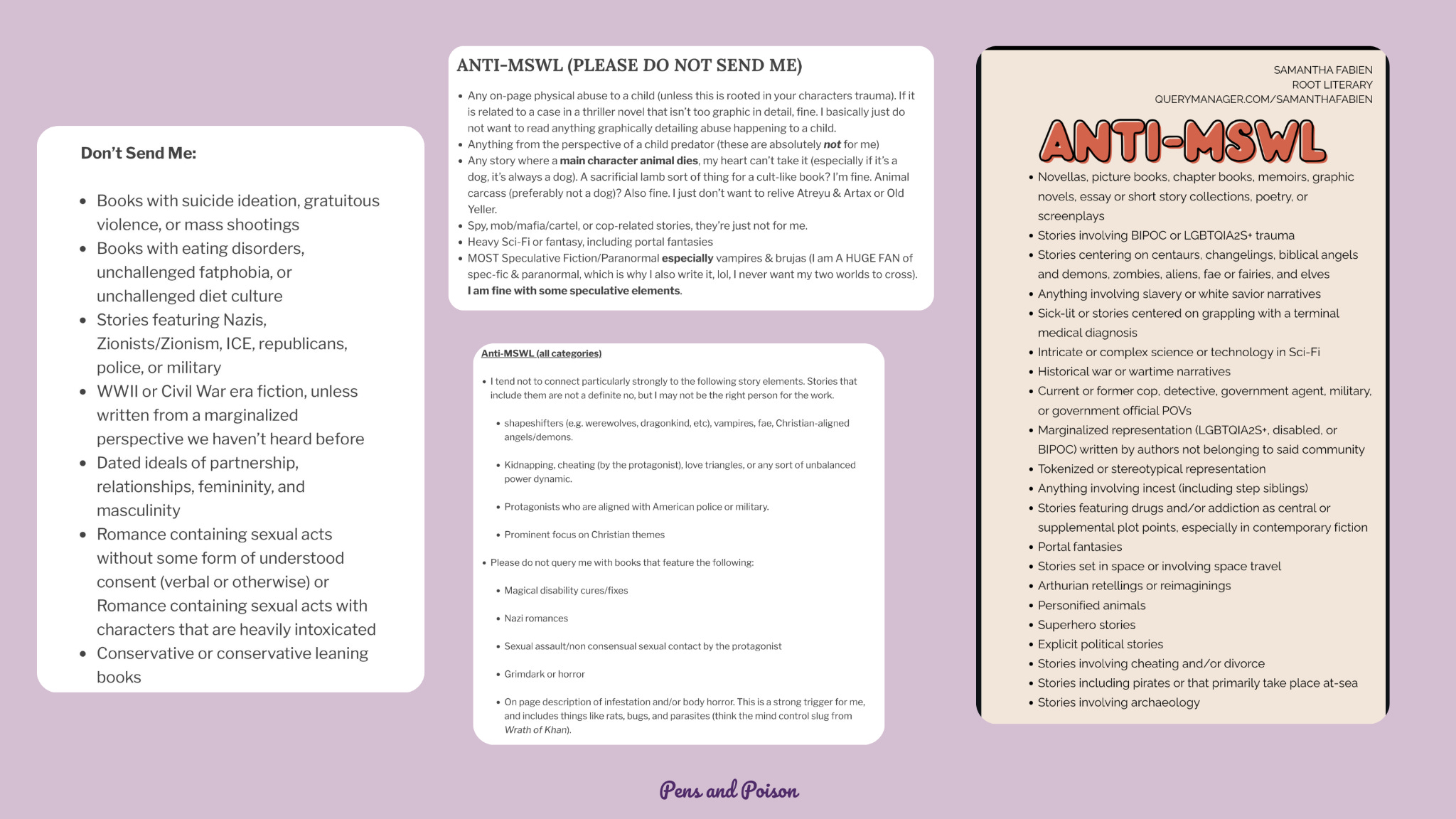
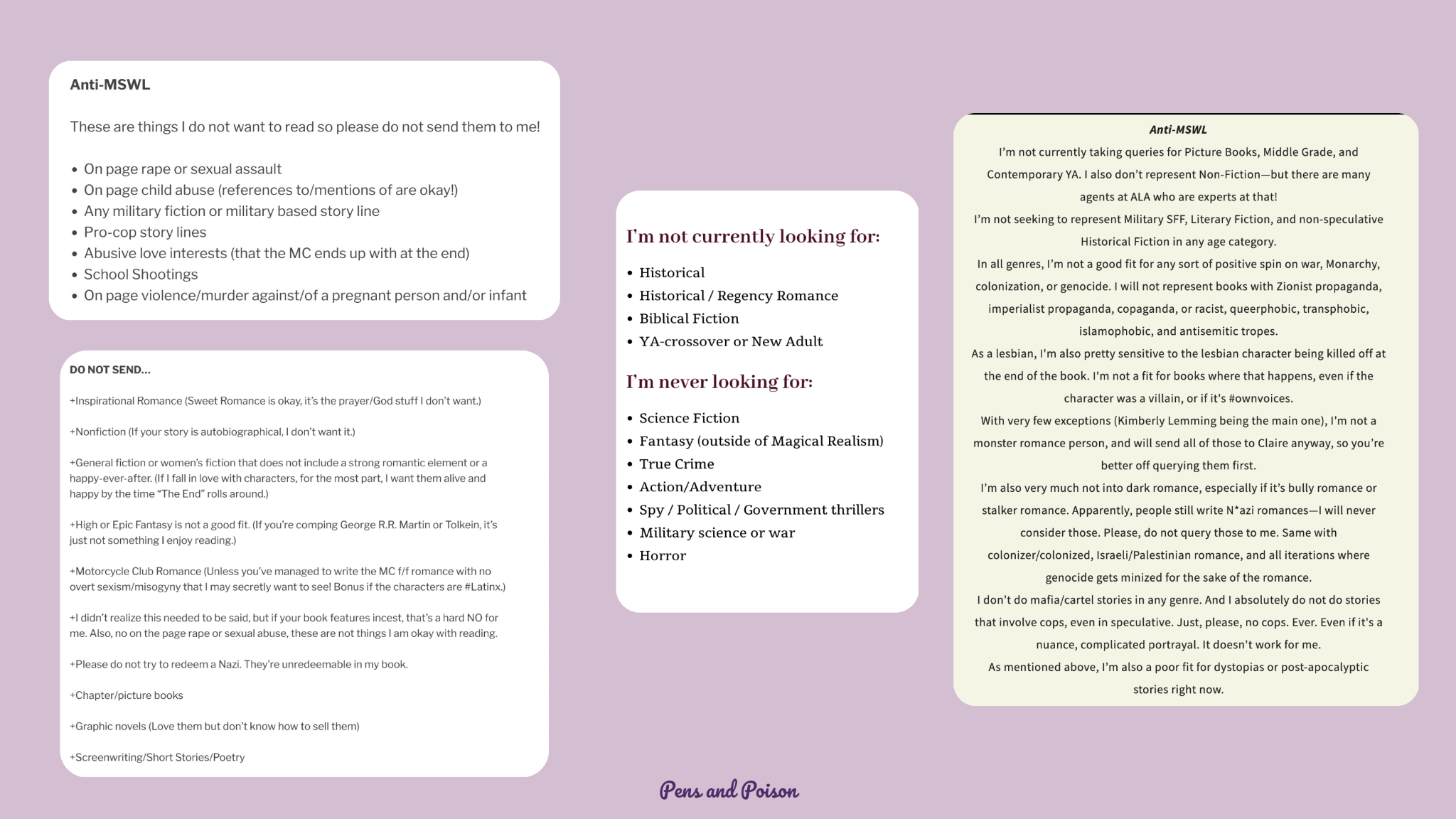
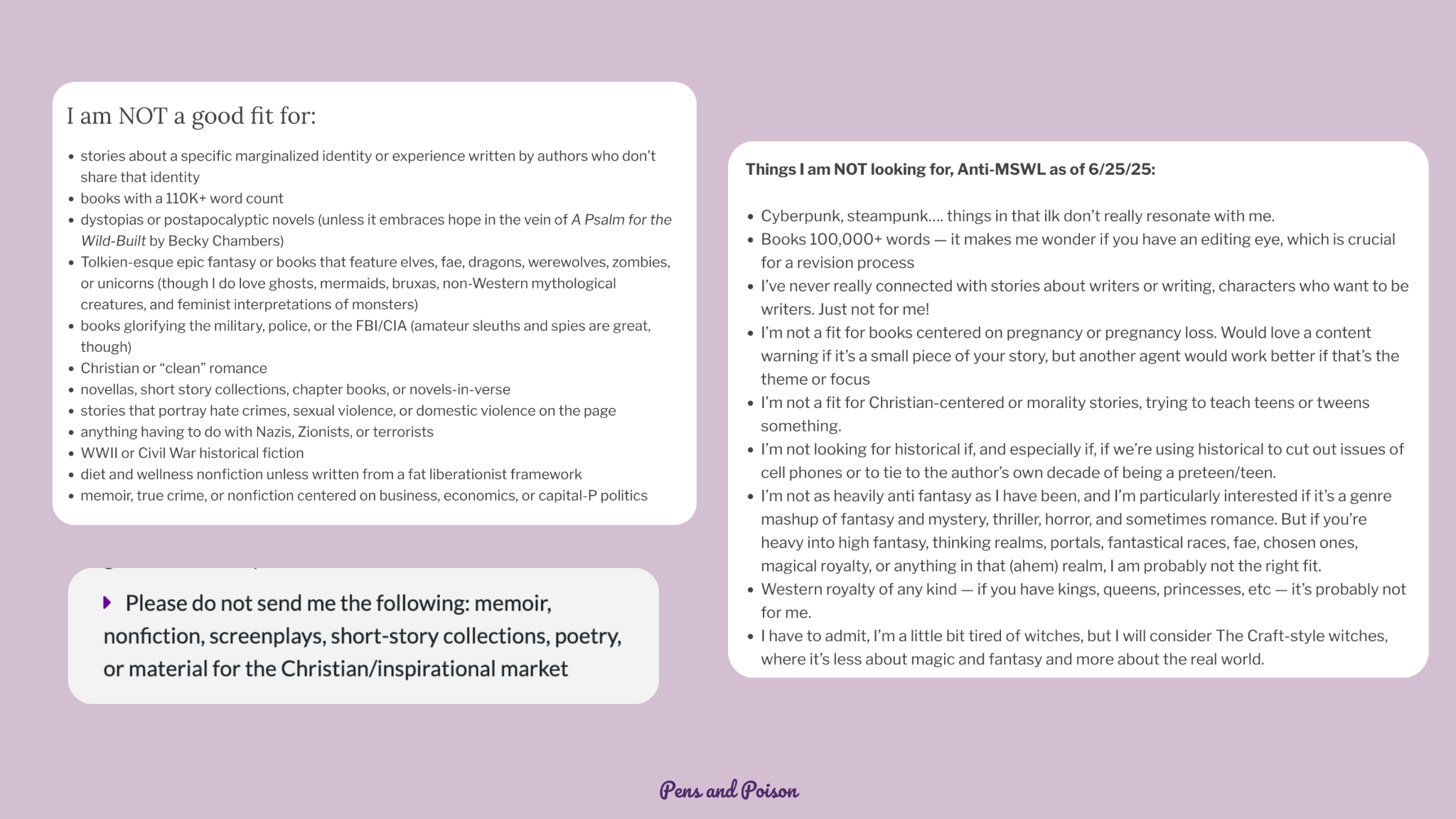
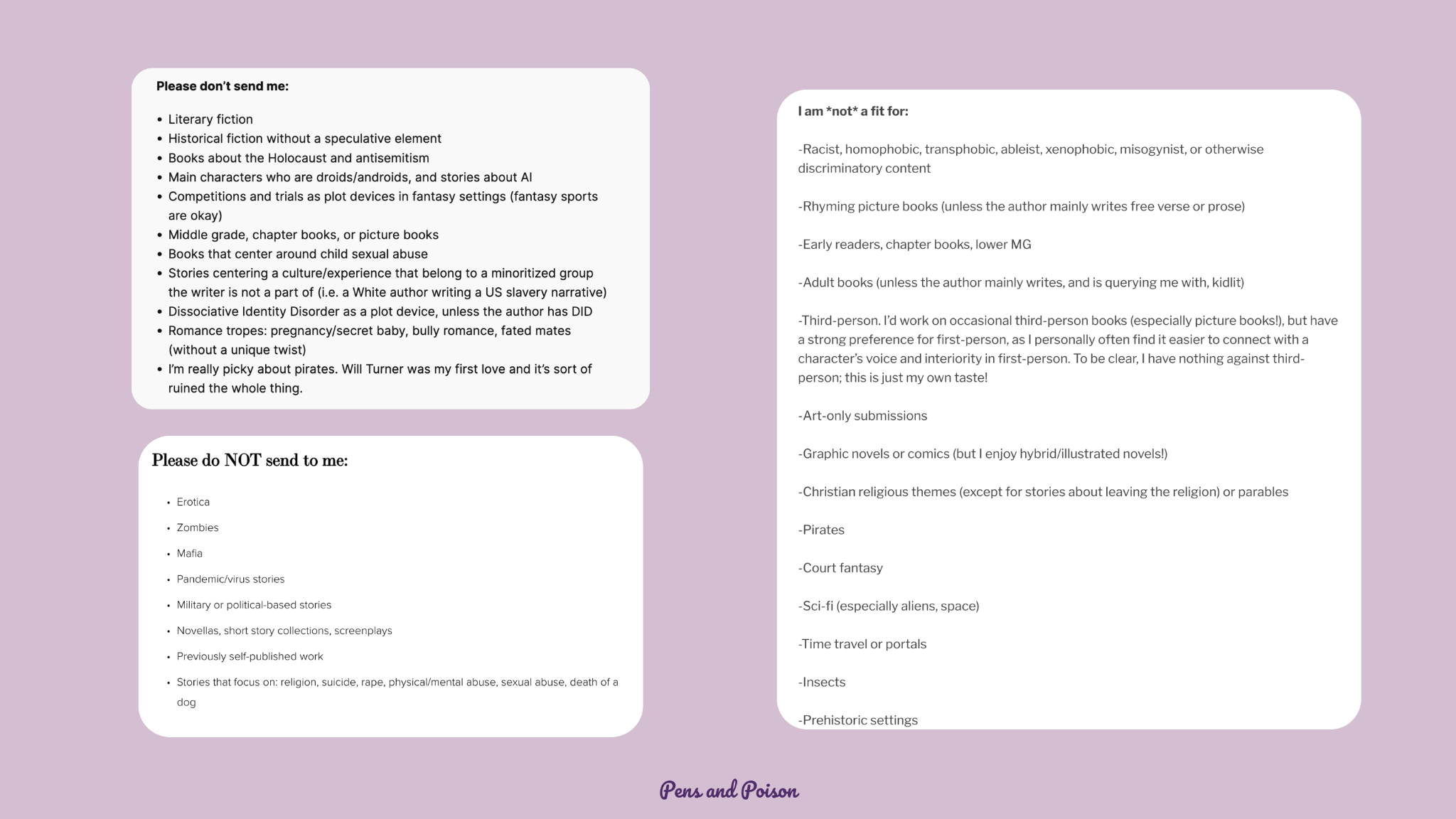
While it is industry standard for publishing professionals to reject genres outside of their specialty, a more chilling pattern emerges upon a closer perusal of these guidelines. Nearly every agent and editor above reports an aversion to religious themes, and a striking number reject books that feature police officers, military protagonists, conservatives, and Zionists. Several agents discourage the submission of stories that portray marginalized identities (unless written by authors sharing those identities), and others explicitly dismiss books they see as politically or morally out of step with their own values.
While a list of 14 is by no means representative of every professional in the publishing industry, the fact that many agents and editors now feel comfortable publicly announcing these ideological exclusions should concern anyone who believes that literature benefits from genuine viewpoint diversity. Because regardless of intention, the practical effect of these lists is to send a clear message to religious and conservative writers: your stories are not welcome here.
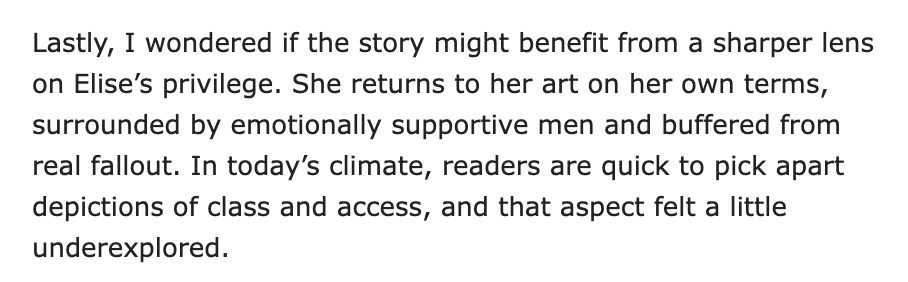
Even conservatives who don’t write overtly “conservative” fiction face the possibility of rejection for promoting “dated ideals of relationships” (whatever that means) or “morality stories” (which just means “morality I disagree with”). One literary agent, for instance, lamented that my novel, which examines the role of beauty and religion in our contemporary culture, failed to adequately address “privilege” and featured “emotionally supportive men.”
Across my three novels, I frequently explore themes of marriage, faith, duty, and morality because they rank among the most enduring questions of our civilization. Yet because my characters ultimately choose marriage over polyamory, faith over spiritual nihilism, and objective morality over moral relativism, they become alien to literary agents who have actively imposed an embargo on the traditional moral imagination.
I was lucky enough to gather tangible evidence of ideological bias in the literary establishment, but the fact is that these prejudices are seldom expressed so bluntly. Instead, they are often reframed as matters of “personal taste,” with agents and editors frequently writing off manuscripts on the basis that they didn’t “connect” with the story or that they couldn’t “relate” to the characters. What this means in practice is that literary agents don’t end up championing the sorts of traditional or religious ideals they don’t subscribe to themselves, resulting in an entire literary milieu where manuscripts become filtered not only by literary merit or commercial viability, but also by ideological compatibility.
This is soft censorship at its finest—and it defies literature’s very purpose to portray a diversity of characters and convictions.
It is true that some of our culture’s greatest authors have been devoted leftists—Jean Paul Sartre, Bertolt Brecht, George Bernard Shaw, to name a few—but it is also true that many others have produced great works of literature—Crime and Punishment, Brideshead Revisited, Anna Karenina—with more “traditional” takeaways. Both are equally valid, and both deserve to live on our shelves. At the end of the day, after all, a healthy literary ecosystem should welcome a variety of viewpoints, featuring novels that sympathetically portray Christians, Republicans, police officers, soldiers, stay-at-home mothers, and traditional families—as well as socialists, atheists, progressives, feminists, environmentalists, and leftists. One need not come at the expense of the other.
Today, however, authors are increasingly discouraged from writing believable, likable characters from across the ideological spectrum. They are either confined to launching an attack on their opponents in the vein of Yesteryear or producing “relatable” protagonists with leftist beliefs. The result is an entire literary culture that has become convinced that the general reading public only wants books like Yesteryear—when in reality, novels that contain alternative worldviews are filtered out long before readers ever have the opportunity to choose them.
But I would predict that if we allowed books with more traditional messages and more politically diverse characters to exit the publishing pipeline, then such books would find a much broader readership than Yesteryear—because most of us are sick of this crap.
The success of Yesteryear poses a grim reality for heterodox readers and writers across the country, but not all hope is lost for the ideologically contrarian novel. As readers, we must actively push for a publishing culture that welcomes writers from across all aisles of the political spectrum. We must make our voices heard and fight against soft censorship in the publishing industry, reminding gatekeepers that literature cannot fulfill its highest purpose until it is free to imagine every possibility of the human mind—and to challenge our existing sensibilities. Because the purpose of fiction has never been to reassure us that our political opponents are monsters but to remind us that, like us, they are human, too.
The day we remember that lesson will be the day our culture regains its humanity.
Enjoyed this post? You can Buy Me a Coffee so that I’ll be awake for the next one. If you are a starving artist, you can also just follow me on Instagram, YouTube, or “X.”
The effect of novelists not "allowed" to write about the poor unless they were poor themselves is most often to erase the poor from fiction. Which is very unhelpful to the poor. Because what we don't see we are free to ignore.
It's also so badly written.