


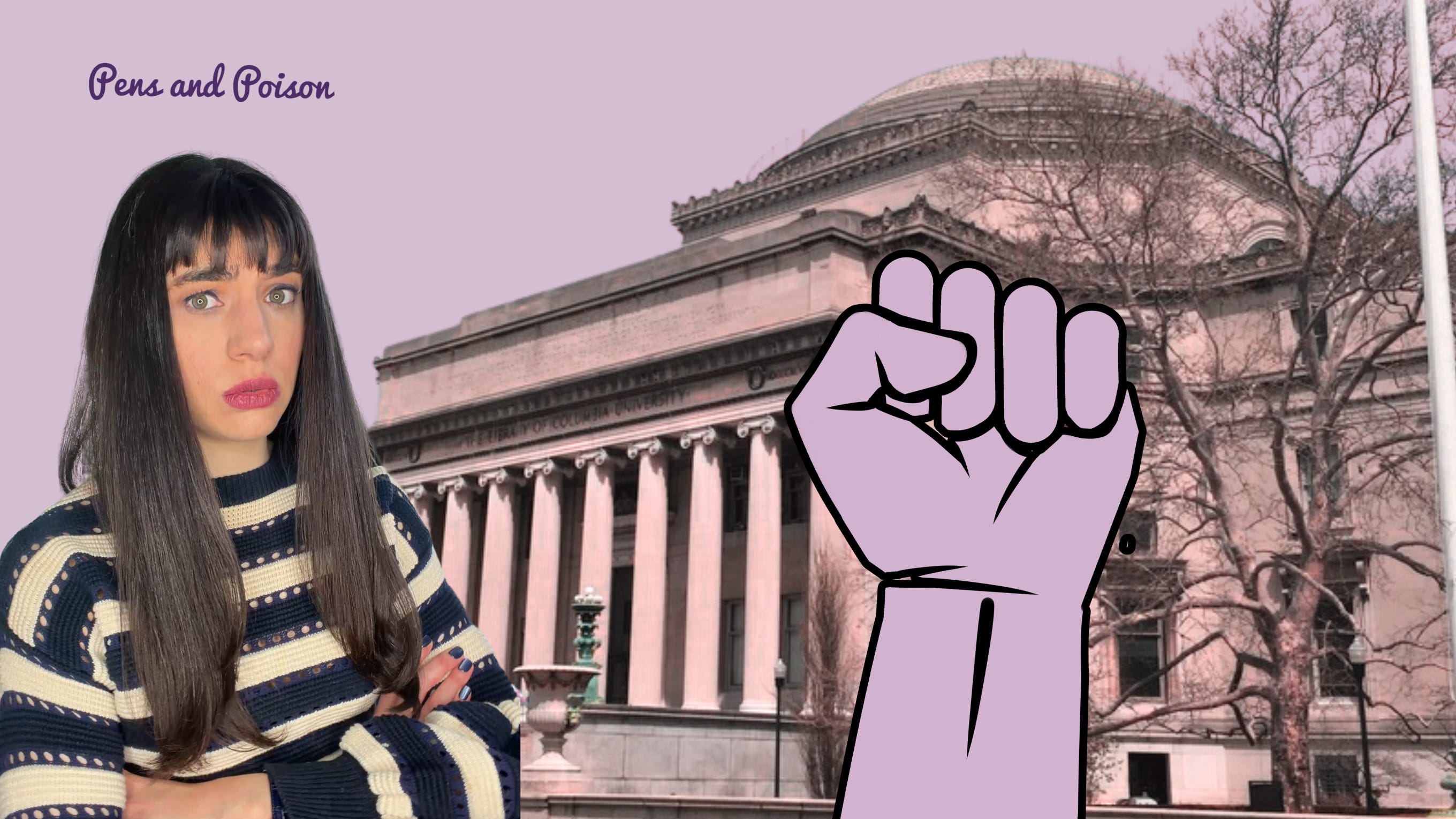
This essay originally appeared in Minding the Campus.
When socialist mayor Zohran Mamdani got elected last year in New York, no one was surprised to learn that the majority of his supporters held four-year university degrees. After all, it is no secret that American colleges and universities have been woke indoctrination camps for several decades, teaching Marxist propaganda in the place of classic literature and feeding students critical race theory for breakfast. But there’s another reason that the majority of students emerge from these programs with staunch socialist convictions: colleges and universities themselves are run like miniature communist societies.
If you went to college in the last 15 years or so, chances are you’ll remember skyrocketing tuition costs, nebulous bureaucratic systems, and an abundance of student clubs that seem to have more money for free food and merch than the company you work for today. In college, after all, everything seems “free”—free medical services, free counseling, free food, free clubs—until you realize who’s paying for it.
Colleges charge exorbitant tuition fees not only to fund your education but also to support the endless supply of extraneous perks that absolutely no one has ever asked for. According to data from the National Center for Education Statistics (NCES), a whopping 40 percent of spending at private non-profit colleges goes to “academic support, student services, and other institutional support.” Spending in this category includes but is not limited to “registrar activities,” “student health services,” and “activities for which the primary purpose is to contribute to students’ emotional and physical well-being.” In practical terms, this means that almost half of your tuition money goes to services that most students have never heard of. Just think of how many times you actually attended a university-sponsored “mindfulness workshop” in the student enrichment center.
But the issue isn’t that these services exist per se, but that they derive their funding from a socialist-like system of wealth redistribution.
Such redistribution starts in the financial aid department. It is common knowledge, for instance, that most middle and lower-class students don’t end up paying the “sticker price” at many four-year institutions but only contribute what they can “afford.” While it is often assumed that endowments help fund generous financial aid packages, in practice, they are largely insulated from direct use—operating more like small investment funds designed to preserve and grow capital rather than to be spent down.
So how can lower-income students afford to attend pricey four-year universities, many of which now cost over $90,000 per year? Well, other students pay for it.
Many financial aid packages are now funded by charging wealthier students more in tuition. In effect, colleges and universities have constructed their own redistributive system, one that operates with little transparency. More troubling still, it is justified in socialist moral language: once “equity” becomes the guiding principle, the idea of a clear exchange—getting X for Y—begins to disappear.
There is, in fact, a fundamental detachment between payment and consumption on American college campuses. In a capitalist society, after all, you choose what to pay for and which products to consume. On a college campus, however, you pay the institution, which—much like a centrally planned economy—chooses which products you will consume.
A student who enrolls in a university thus faces a fundamental lack of choice in terms of what he or she pays for—and ends up coughing up an exorbitant amount of cash to fund so-called “free” university services. Not only will this student seldom use the services he funds, but he will also relinquish the power to demand higher-quality alternatives—once something feels “free,” evaluation of quality falls to the wayside. As a result, dining hall food becomes almost universally inedible: there is no option to upgrade your dining plan for a better meal or choose a competing dining hall company that may provide a better product. Similarly, gyms are always overcrowded, and it may take several weeks to secure an appointment with a school counselor or a doctor—closed systems, after all, create artificial scarcity and lead to an overall decline in quality of service.
The subsidization of student clubs poses similar problems: one’s tuition funds all student organizations regardless of that group’s productivity or ideology. When I was enrolled at Columbia, for instance, my tuition money funded “Students for Justice in Palestine”—a group that periodically declared their desire to murder me—and as a tuition-paying student, I had no option to opt out of supporting the group’s atrocities. Similarly, my tuition funded many clubs with little use to the college “society” at large. Several clubs did nothing but throw parties all semester. Under a capitalist system, such defunct or unpopular organizations would not stand a chance, but at a university, all student clubs, kept alive through shared funding, survive regardless of popularity and functionality.
Worse still, at most universities, all student organizations receive the same amount of money through an allocated semesterly budget. When I ran the Slavic Department’s lit mag, for instance, we had several thousand dollars to play around with every semester, and because the money went away if we didn’t use it by the end of the term, we spent most of it on takeout food. I can only imagine how much tuition money was wasted on such frivolous spending across all student groups, creating massive inefficiency on a university-wide level.
The worst part, however, is that any given student can’t just decide to opt out of these terrible services and thereby save tuition money—his money is distributed equally across a variety of services that the college has deemed “essential.” While one might argue that such a model resembles taxation in a democratic society, taxation depends on earning income rather than paying for goods and services. A better analogy would be going to the Apple Store to purchase a new phone. Let’s say the latest model of the iPhone costs $1,000 by itself. To purchase the phone, however, I am told that I must pay $5,000 for a bundle containing matching AirPods and the newest MacBook. While each of these items may, in theory, increase my general productivity, they will only serve me well if I wish to purchase them voluntarily. In this case, I would prefer to save my money and walk away with only a phone, yet if I am told that the phone comes only in the bundle and I am in desperate need of a new phone, then I have no choice.
It is precisely because of such inefficiencies that colleges and universities now cost an arm and a leg. Mandatory participation in the system means that you can’t redirect your money while staying enrolled at a university, and because all universities follow this model, I can’t simply choose to take my money elsewhere. Meanwhile, as services expand, administrative layers grow—and higher education becomes even more unaffordable for everyone.
It is no wonder, then, that students emerge from four-year colleges with staunch Marxist convictions. They fail to understand that someone must pay for their so-called “free” services because universities deliberately obscure how those services are funded. Similarly, these students don’t shy away from central planning because there’s no alternative at the higher education level—and they don’t understand that competition could make so many of the services they complain about so much better.
It’s time for academia to rein in spending and adopt opt-in models. Tuition should cover only classes, with other services available for purchase. Students who desire to use athletic facilities can pay an additional membership fee, and students who wish to spend their afternoons protesting on lawns can join Students for Justice for Palestine for a cost. Under such a model, unpopular services would disappear, and in-demand services would be incentivized to provide better results.
Most importantly, under such a system, college and university students would see the beauty of a functional capitalist society—and come out ready to tackle the real world.
Enjoyed this post? You can Buy Me a Coffee so that I’ll be awake for the next one. If you are a starving artist, you can also just follow me on Instagram, YouTube, or “X.”
I just finished Mary McCarthy's The Group, which follows a Vassar class of 1933 where they all spout Marxist beliefs that they learned in college, and the most vehement are the men who want revolution yet live off their wives' wages or inheritance. It was surprising how relevant this book was to today's politics.
The career students I went to graduate school with were some of the most inept, indoctrinated automatons I had ever seen. Higher ed is now where independent thinking goes to die. I spent the few years between undergrad and grad working; in terms of experiential distance, it might as well have been decades. The professors—career students par excellence—were not much better. I went from political science to history, which was also revealing.