


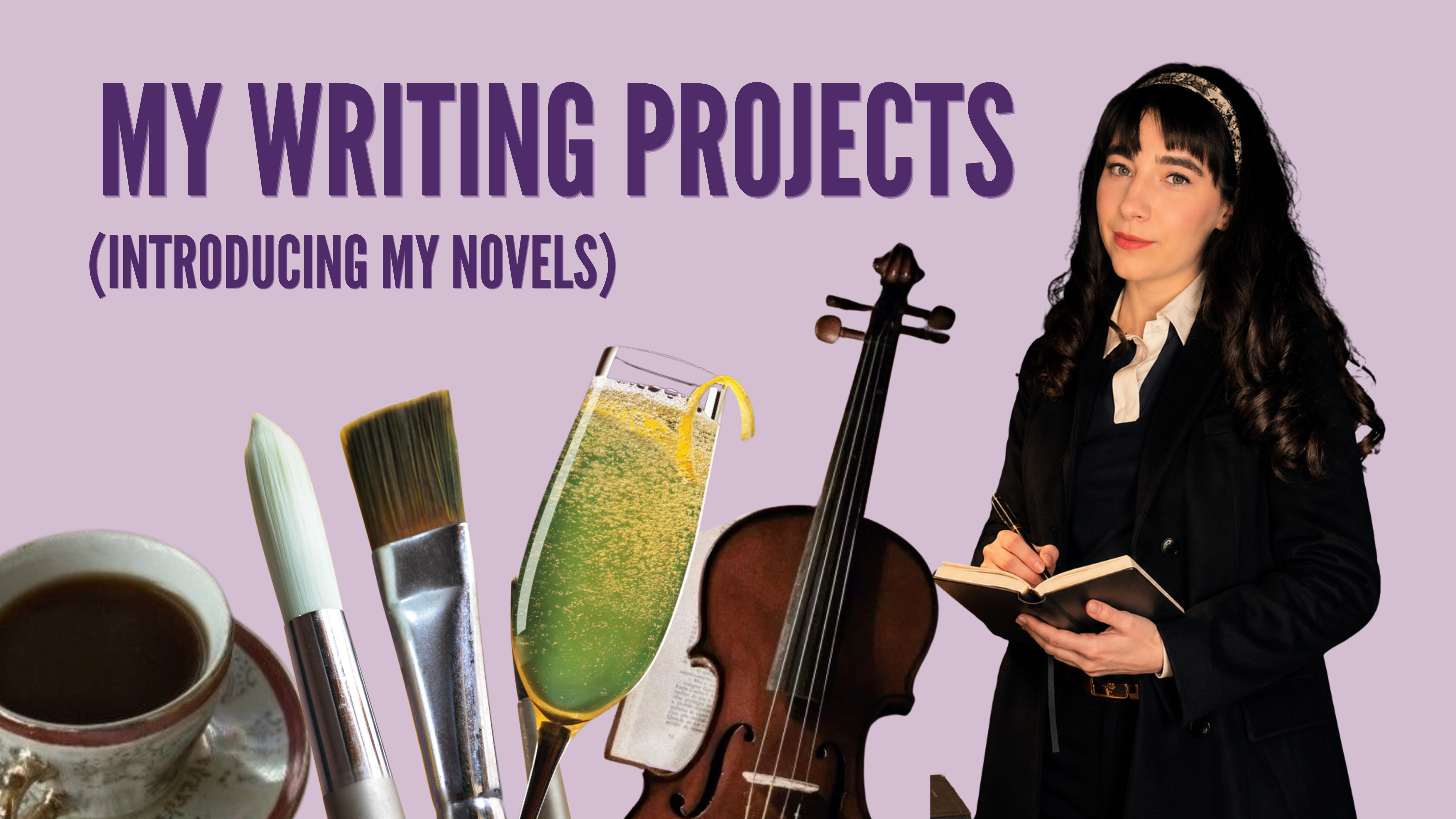
My name’s Liza.
You may know me as the writer behind your favorite Substack, Pens and Poison, but when I’m not reading Dostoyevsky or lamenting the state of our culture, I’m writing novels.
My dream has always been to move people with my stories in the same way that my favorite stories have made my life more beautiful and meaningful—and the best way I know to do that is by putting my words out into the universe.
Over the past five years, I’ve been actively chasing my dream of becoming a published author. I’ve written six novels in total, and I’m particularly proud of three of them. My novels have sparked debates about art, culture, beauty, and the meaning of life—and many chapters have even moved readers to tears.
Despite these literary feats and my burgeoning online presence, publishing professionals frequently tell me that there’s no market for the sorts of slow, introspective books I write.
But I know that that’s not true—there is a market for slow, introspective books; there are readers who want to read a modern Kafka or a Dostoyevsky—and I have the audience to prove it.
The rise of BookTok culture has convinced many publishing professionals that readers don’t want deep, introspective fiction on our shelves, but every day, I get messages from Pens and Poison readers that remind me that there has to be a market for the sorts of books I write—and a larger one than most people think.
Sure, there’s a time and place for steamy romance and suspenseful thrillers and ideological fiction, but there’s also a desperate need for great contemporary literature that explores the human soul.
And frankly, I’m tired of being told that my books just won’t “sell.”
So today, I’d like to take you on a tour through the Liza Libes literary universe and tell you a bit more about my novels with the hope that we can get my pitches in front of a literary agent who shares my love of the literary greats.
Whether you’re a longtime follower or are just passing through the Pens and Poison universe, I’d love it if you could take a moment to share this post with your friends. With a bit of luck, we can get these pitches in front of the right people—and get my books out into the world.
Here’s a bit about each of my novels—and what makes them special.
THE LILAC ROOM

The Pitch
Cassandra Feuerbach—or Cassie, if you catch her outside of a business meeting—has built her entire identity on control: control of her New York startup, control of her reputation, and (if she’s being honest) control of her loneliness. But when her sales agent Rebecca Solomon dies in the office bathroom (that can’t be good for publicity), Cassie’s delicate façade begins to unravel.
Delving into Rebecca’s past, Cassie meets Rebecca’s secret lover—the kind, ungainly Adam Gershon—and is drawn into the glittering, deranged world of The Lilac Room, a controversial social experiment that took Rebecca’s life.
As she pieces together the details of Rebecca’s downfall, uncovering secrets about the excesses and hypocrisies of New York’s social elite, Cassie gradually realizes that she might not be morally superior to The Lilac Room’s dubious creators.
Torn between the ruthless ambition that built her success and the conscience that Adam awakens in her, Cassie must choose whether to remain complicit in the morally fraught corporate world or to sacrifice her company to keep her conscience clean.
The Characters
Cassandra Feuerbach
The headstrong yet somewhat callous CEO of career coaching firm Empire Academy, Cassie is desperate to join the ranks of the New York elite.
Adam Gershon
An uncouth FBI agent whom Cassie meets the day before her sales agent, Rebecca Solomon, mysteriously passes away.
Nelli Wigg
Adam’s flighty ex-girlfriend who owns a jazz club in Brooklyn... and who knew the girl who passed away.
Aaron Mendelson
The CEO of Stellar Career and Recruitment, Empire’s biggest rival, who might have been connected to Rebecca’s demise.
The Themes
Ambition vs the Good Life
At the beginning of the novel, Cassie believes that success is bound up with prestige, wealth, and status. By the end of the novel, success means something different to her.
Moral Corruption
At the center of The Lilac Room are the effective altruists—a group of people obsessed with optimizing humanity. But at what cost?
Hedonism vs. Responsibility
Cassie and Nelli are both slaves to their desires, but at what point does pleasure become self-destructive?
The Ills of the Corporate World
The corporate world of The Lilac Room treats people as instruments rather than ends in themselves, effectively stripping people of their humanity.
THE LEVERKÜHN QUARTET
The Pitch
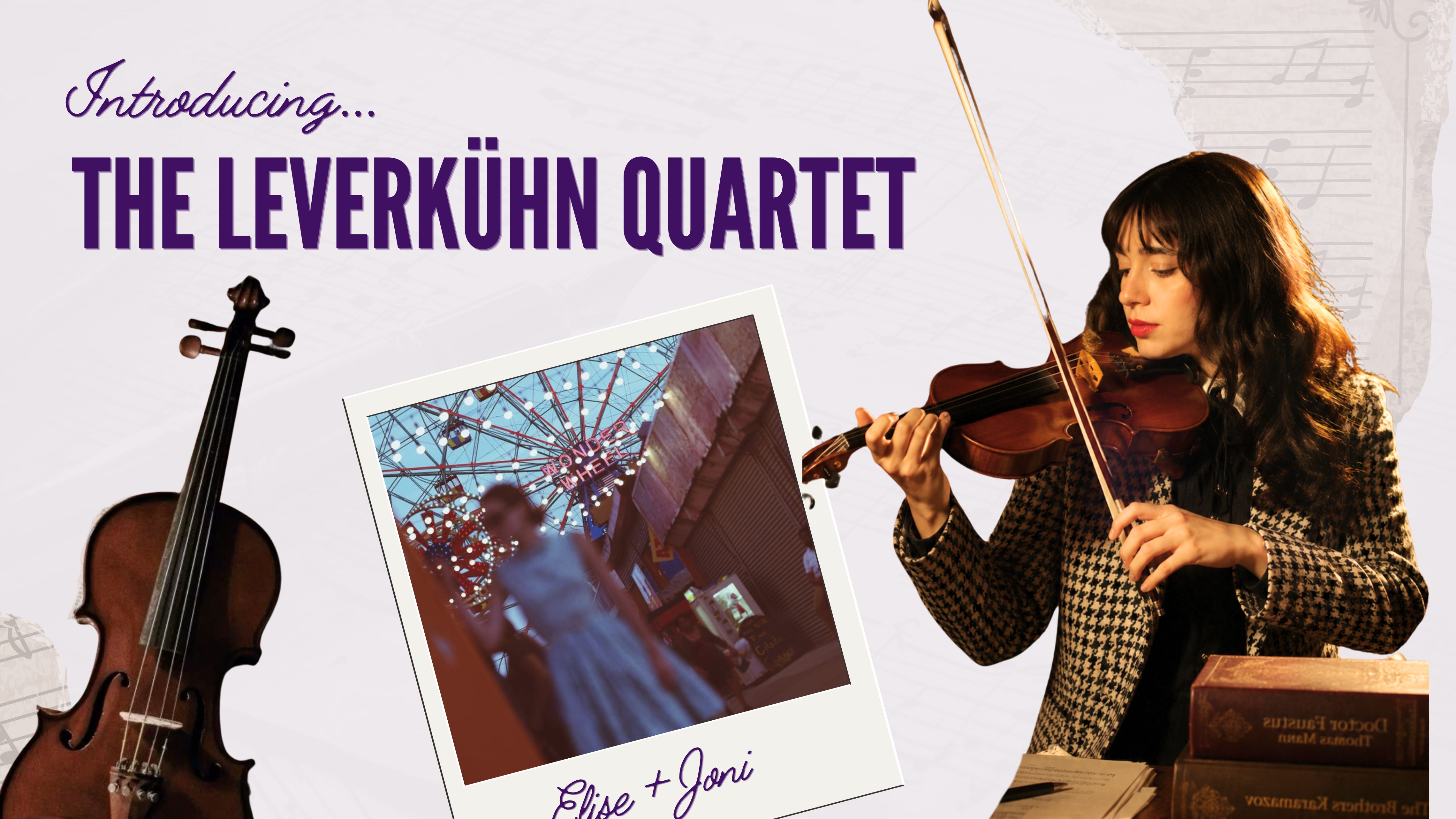
New York young professional Elise Goldberg hasn’t touched her violin in nearly a decade. She enjoys a quiet life at home—with her lucrative banking job and her somewhat religious Jewish fiancé—and does not think twice about the passion she once traded for stability. But when she reconnects with her ex-lover, the brilliant but troubled composer Adrian Liederschloss, Elise is flung back into the world of music.
Plunging deeper into the milieu of her new string quartet—a volatile circle of creatives, ideologues, and outcasts—Elise becomes entangled in a Faustian drama to recapture her violin virtuosity as she questions her engagement to her fiancé, her more-than-friendship with her childhood best friend, and her place in the Jewish world. Grappling with the cost of artistic obsession on the cusp of her debut at Carnegie Hall, Elise must ultimately decide not only whom she loves but whether Beauty can be found in a world that seems to have turned its back on it.
The Characters
Elise Goldberg
A former violin prodigy of Russian-Jewish heritage who joins her ex-lover’s new string quartet.
Adrian Liederschloss
A brilliant yet troubled composer who believes that only suffering can create great art.
Jonathan Kaminsky
A retired Navy lieutenant and Elise’s childhood friend who doesn’t know her biggest secret.
Ben Orlov
Elise’s fiancé who comes from an Orthodox Jewish family yet comes to terms with Elise’s secularism.
The Themes
Beauty and Suffering
Adrian believes that suffering is the sole source of artistic greatness, while Elise believes that all great art must have something to do with Beauty.
The Role of Memory
Elise associates some of her most tender moments with childhood memories, driving her decisions in the present.
Jewish Identity and Belonging
Judaism is both a cultural and a religious identity—but what happens when one clashes with the other?
Tradition vs. Modernity
Leverkühn’s characters are constantly on a quest either to break free from tradition or to preserve it—but which way is correct?
BLUE SNOW

The Pitch
Mia Rozen is a successful indie pop-star—but since her muse Teddy cut her off for good, she can no longer write music. Now she’s stuck in therapy—and worse, her label might drop her soon. But Teddy was never hers in the first place, and all she’s left with is a husband who offers safety but doesn’t really understand her art.
Told through a series of confessional therapy sessions, Blue Snow reconstructs Mia’s past with Teddy as she confronts her mistakes and sins, deciding whether she can continue mining the chaos of her past for the sake of art—or whether choosing peace and adulthood will require extinguishing the volatility that made her an artist in the first place.
The Characters
Mia Rozen
A volatile indie pop-star who has achieved all of her artistic dreams but can’t write music without her muse Teddy.
Teddy Garfinkel
An immature subway worker who becomes the lifeblood of Mia’s art and the source of her obsessions.
Cal Borghese
A quirky Dante scholar who can’t stop talking about sin.
Georgia Melnick
Mia’s best friend from college who has ambitions of her own.
The Husband
Mia’s unnamed husband who loves her but can’t seem to understand her.
The Themes
Fantasy vs. Reality
Mia falls in love less with Teddy than with her idea of him—and Blue Snow asks whether we ever truly fall in love with a person or whether we construct our world around an idea of them.
Art and Obsession
Unlike Leverkühn, where art is philosophical, Blue Snow examines the pathological side of art. Mia’s songwriting becomes inseparable from her fixation on Teddy—and her sanity unravels shortly after.
Authenticity vs. Performance
In the world of Blue Snow, everyone performs. Mia believes that Teddy is the one authentic person she has ever met, but he may be performing just as much as everyone else.
Sin and Redemption
Cal romanticizes sin, while Teddy seeks purification through religion. Blue Snow asks whether sin is truly evil—and what our chances are at redemption.
Enjoyed those pitches?
Well… I have a special surprise for you!
I’m so excited to unveil my latest novel-in-progress—and the fourth official novel I hope to add to the Liza Libes oeuvre soon!
Some of you know that I’ve been (diligently) re-reading The Brothers Karamazov lately. That’s because my latest project is an homage to Dostoyevsky and a loose retelling of The Brothers Karamazov—from a female Jewish perspective rather than a male Christian one (with a contemporary twist, of course).
Without further ado, I’d love to introduce you to The Brodsky Sisters.
THE BRODSKY SISTERS
The (Working) Pitch
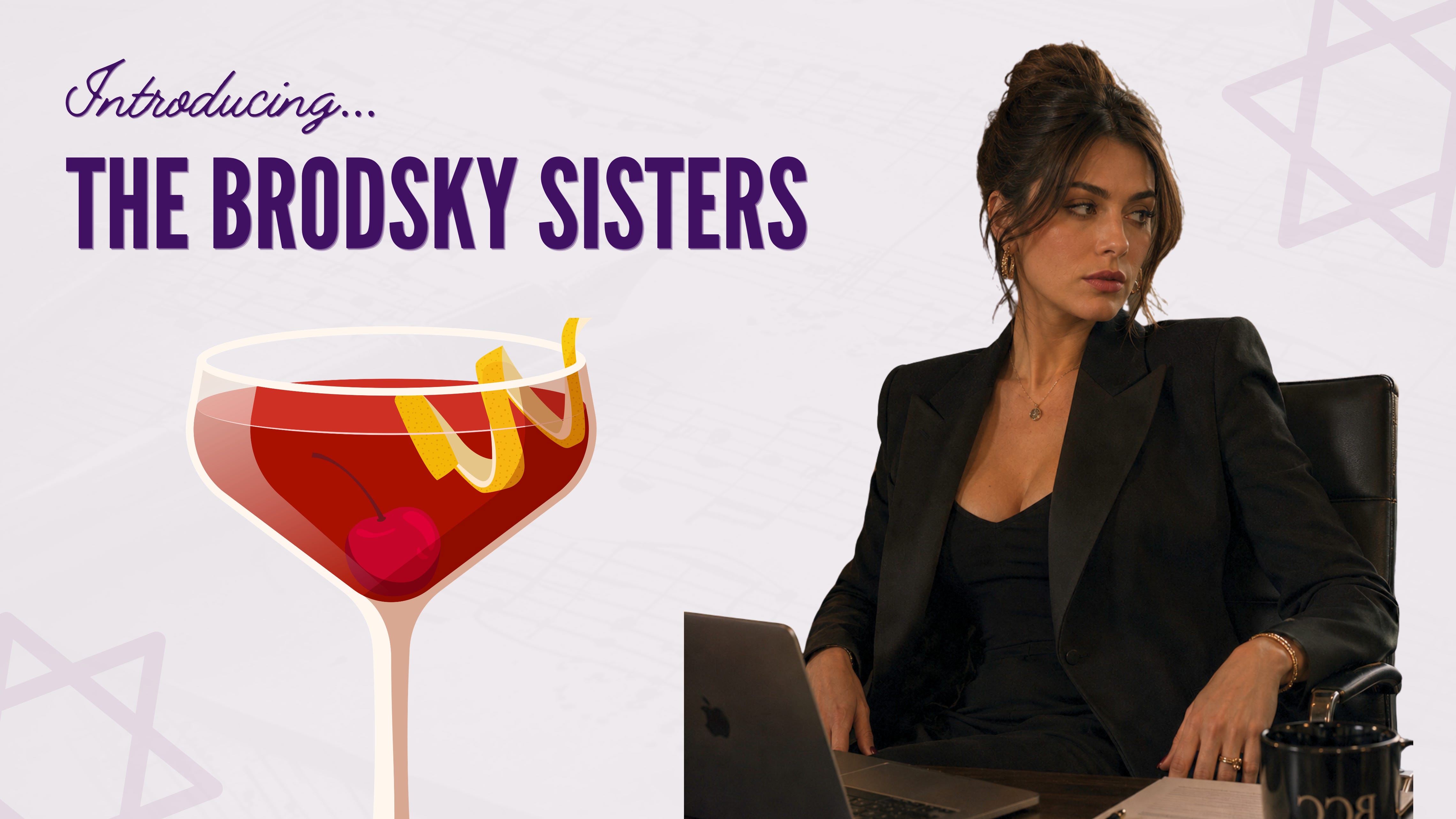
When Nicole Brodsky—the formidable CEO of Boston Consulting Conglomerate and the matriarch of the Brodsky family—exposes the affair of her oldest daughter—Delilah Brodsky—with a much younger coworker, the estranged Brodsky sisters are flung back together for the first time in years, reopening decades of trauma and resentment. But before the family can reconcile, Nicole is found dead in her Manhattan hotel room.
The death appears to be a suicide until police uncover records of Delilah’s threats to kill her mother—and suspicion soon falls on the eldest Brodsky sister.
As the investigation unfolds, the sisters become divided not only over who killed Nicole, but over questions about Jewish identity, desire, loyalty, and faith as they confront long-buried family secrets—including the existence of an unknown fourth sister whose identity threatens everything they believe about their family.
The Characters
Nicole Brodsky
A ruthless CEO who built one of the country’s largest consulting firms—and is found mysteriously dead at the Ritz-Carlton.
Delilah Brodsky
The eldest Brodsky sister who inherited her mother’s brilliance. Once a rising director at her mother’s firm, Delilah is both humiliated by her affair and suspected of matricide.
Agnes Brodsky
An atheist journalist with a love of philosophy and literature, Agnes prides herself on her devotion to reason over faith.
Evie Brodsky
The youngest Brodsky sister and a sensitive art student who has embraced Orthodox Judaism.
The Themes
Faith in the Time of Modernity
The Brothers Karamazov was set in a time when religious skepticism was more anomalous than faith. In our time, those roles are reversed. The Brodsky Sisters asks whether there is room for faith in a world that has increasingly abandoned it—and whether we can find meaning in a world that has turned its back on religious belief.
Freedom vs. Duty
Delilah believes that freedom means satisfying desire, Agnes believes it means intellectual autonomy, and Evie believes that true freedom comes through obedience to God. But what is freedom, really?
Family as Inheritance
The sisters inherit far more than genetics from Nicole—and her death forces them to ask which parts of that inheritance they wish to keep.
Envy and Resentment
At the heart of the novel is the Brodsky sisters’ resentment of their mother’s success, which drives them to reveal their true colors.
I’d love to hear about which one of my projects piqued your interest the most—and which one you’re most looking forward to reading!
And if you enjoyed reading about my four novels, help me get my books published by taking a moment to share this post with your friends.
My hope is to get my novels in front of a literary agent who shares my love of the literary greats so that we can bring great literature back into the world.
In the meantime, thanks so much for reading Pens and Poison.
Enjoyed this post? You can Buy Me a Coffee so that I’ll be awake for the next one. If you are a starving artist, you can also just follow me on Instagram, YouTube, or “X.”
These sound less like literary fiction than like standard commercial fiction -- CEOs, pop stars. corporate milieus, "young professionals," secrets, ambition. debuts at Carnegie Hall... The plots are overheated and the characters largely types. These pitches don't make me want to read any of them.
Forget agents. Forget trad. Publish yourself. Never a better time.