


What are my top ten books of all time… and why?
When I first started my Substack two years ago, I compiled a list of my top 10 favorite books of all time for my 60 or so subscribers. Now that there are so many more of you in the Pens and Poison universe, I thought it would be appropriate to revisit my list two years (and many books) later—and implement some revisions. While the list remains largely unchanged, I’ve reordered a few of my picks and added my latest favorite literary icons to reflect my evolving preferences.
It’s always hard to choose just ten books to call my “favorites,” but if I had to pick just ten, here are the books I believe to be the greatest literary creations of all time—and why you should read them, too!
10. Anna Karenina by Leo Tolstoy
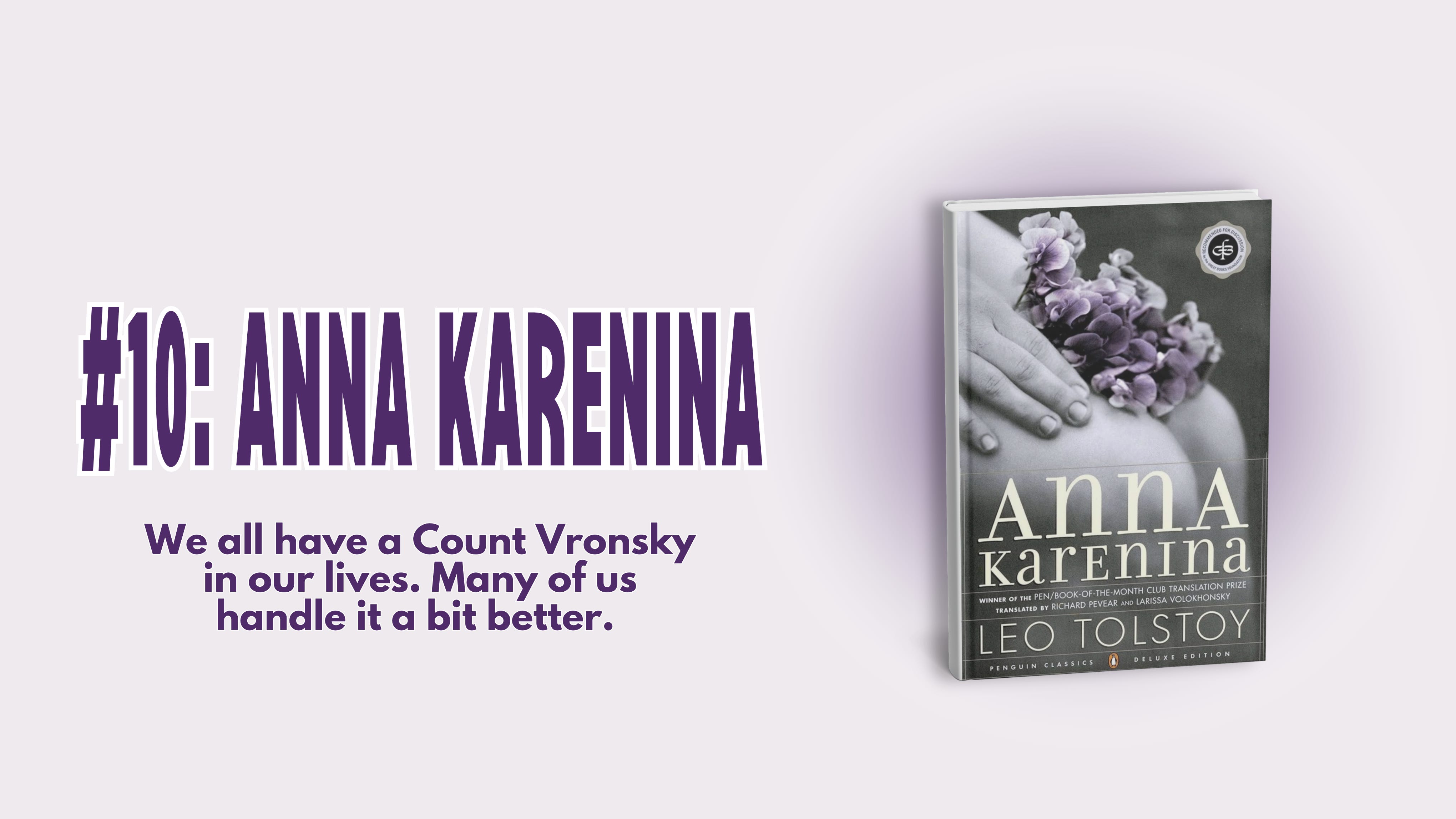
We start off strong with Anna Karenina by Leo Tolstoy. I always turn to this book whenever I need to explain why reading literature is still important to us today: Anna Karenina is full of the very universal moral messages that make classic literature so relevant to contemporary readers. To me, the mark of a great work of literature is the ability to comment on the universal by way of the particular, and Tolstoy nails this exercise by giving us a glimpse into the lives of several families who lead radically different lives.
Most people know Anna Karenina as the story of a woman with a dicey extramarital affair, but what gives Anna Karenina its philosophical weight is not necessarily Anna’s story arc but Levin’s. Through the character of Konstantin Levin, Tolstoy depicts the quest for redemption and shows us the virtue of religion, marriage, and family. I would recommend this novel over any self-help book that purports to teach you how to live a “good life.” Tolstoy has far more answers than Mark Manson.
9. Middlemarch by George Eliot
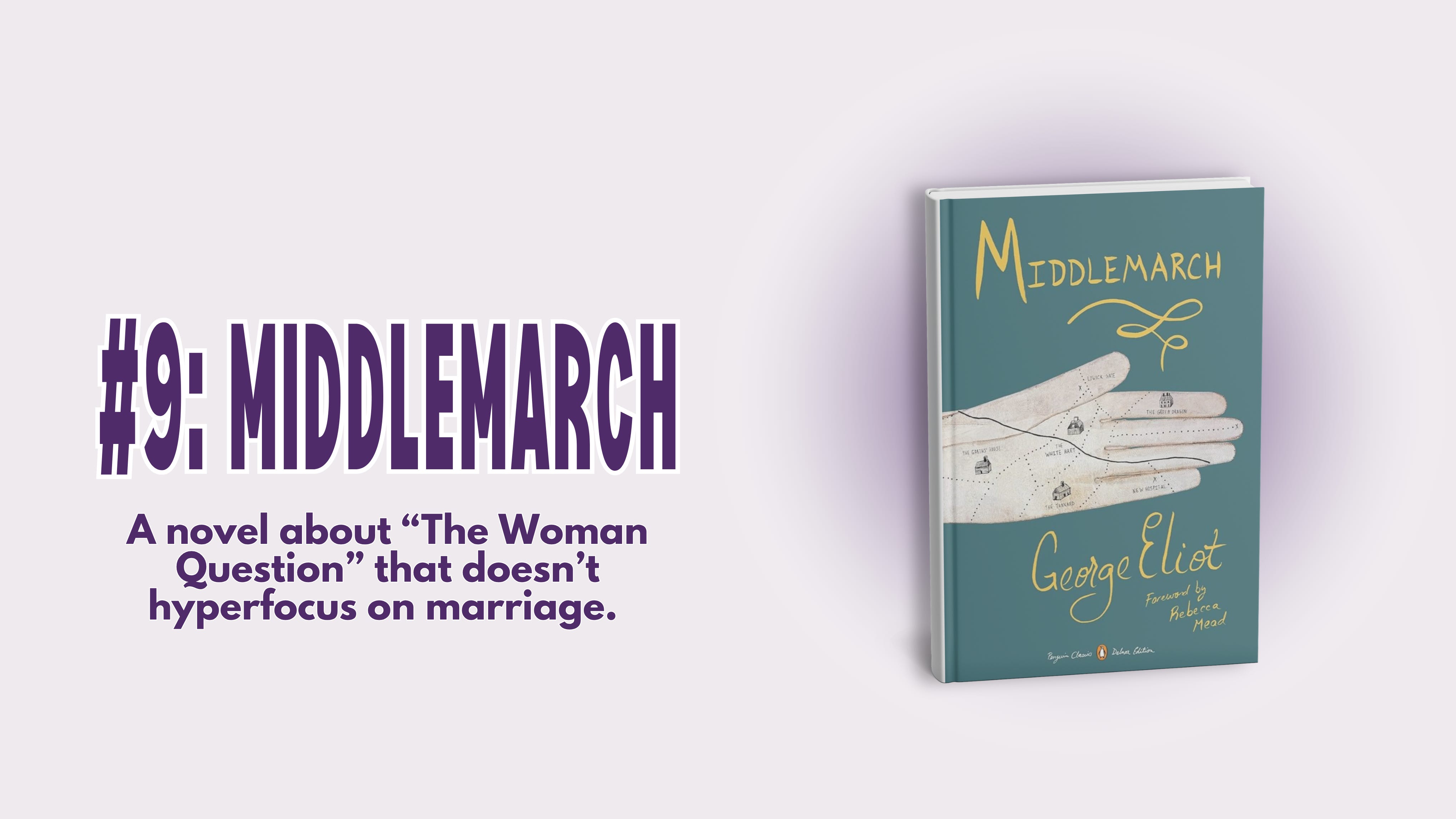
As Wikipedia puts it, Middlemarch is a novel about “The Woman Question”—and perhaps the only major Victorian novel to tackle the question of womanhood without putting marriage at the forefront. Middlemarch follows the story of the nineteen-year-old provincial orphan Dorothea Brooke and her marriage to the scholarly Edward Casuabon… which doesn’t work out too well for her. Meanwhile, over in town, we meet the doctor Tertius Lydgate and follow his own adventures as he becomes literature’s first modern doctor.
If you’re interested in learning more about the birth of the modern doctor in literature, I wrote about Lydgate and his role in the Victorian medical community here.
8. The World of Yesterday by Stefan Zweig
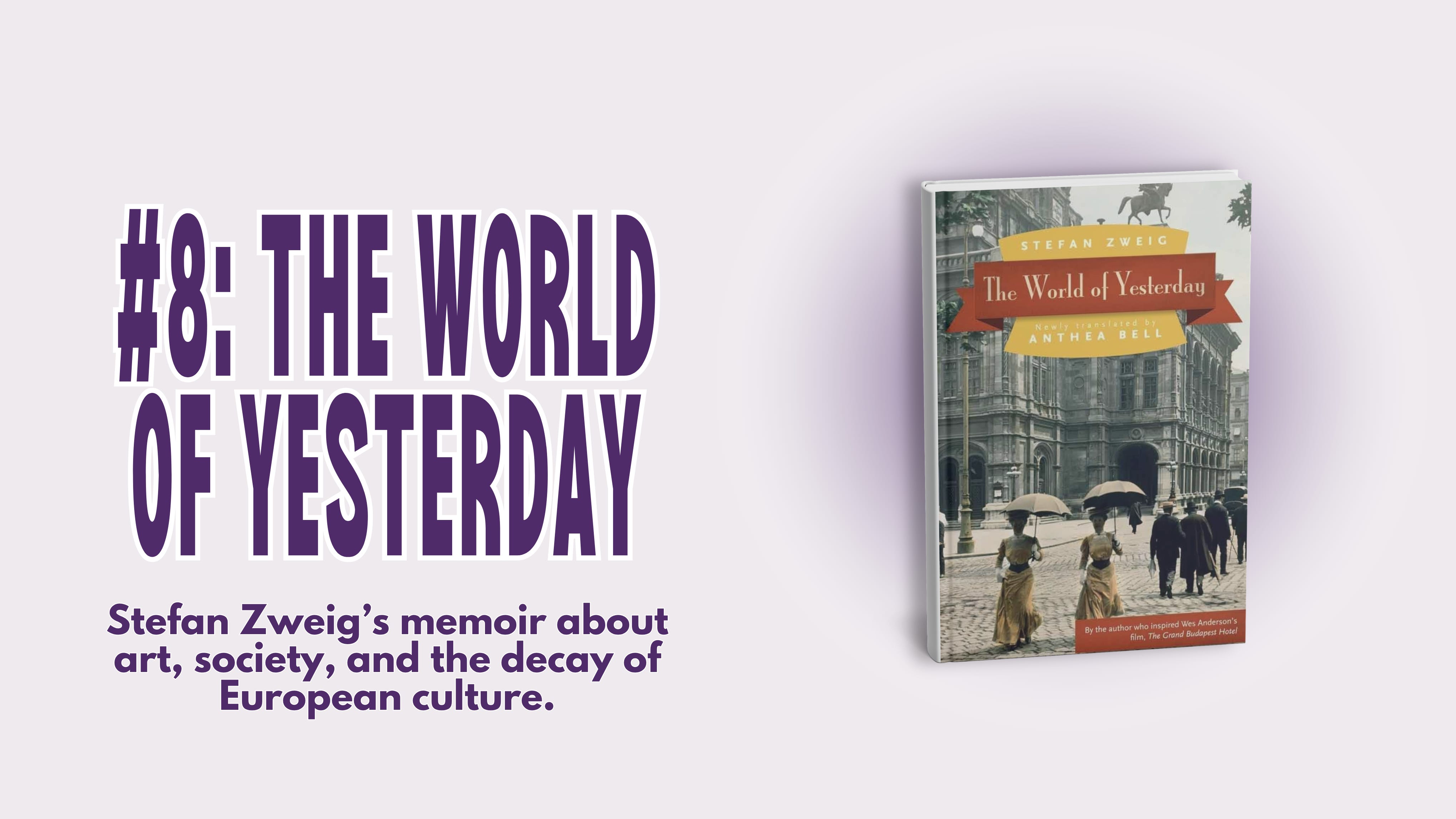
Next up is not a novel but a memoir. I wanted to keep this list strictly to fiction titles, but Zweig’s memoir reads so much like a novel that I thought I’d throw it on here because it really is one of my favorite books of all time.
The World of Yesterday is essential reading for anyone who cares deeply about art, culture, and Western society. I am continually baffled by the fact that Zweig isn’t as widely read today as he was during his lifetime, but maybe Pens and Poison readers can change that.
Zweig’s memoir—written on the cusp of his suicide in Argentina—traces the author’s childhood in his beloved Europe and his despair upon witnessing the decline of the beautiful civilization that gave him life as an artist and an intellectual. In The World of Yesterday, we meet famous artists and intellectuals—Richard Strauss, Theodor Herzl, Rainer Maria Rilke, to name a few—and learn about their effect on Zweig’s life in prewar Europe.
What I personally love most about the memoir is its reminder of the integral role that Jewish intellectuals played in the development of Western culture and civilization, especially in Zweig’s Vienna. Douglas Murray, in fact, opens up The Strange Death of Europe with a reference to Zweig’s Europe, which shaped the dying civilization he explores in his book.
The World of Yesterday is perhaps one of best accounts ever written of cultural collapse and historical grief. More about it here.
7. Brideshead Revisited by Evelyn Waugh
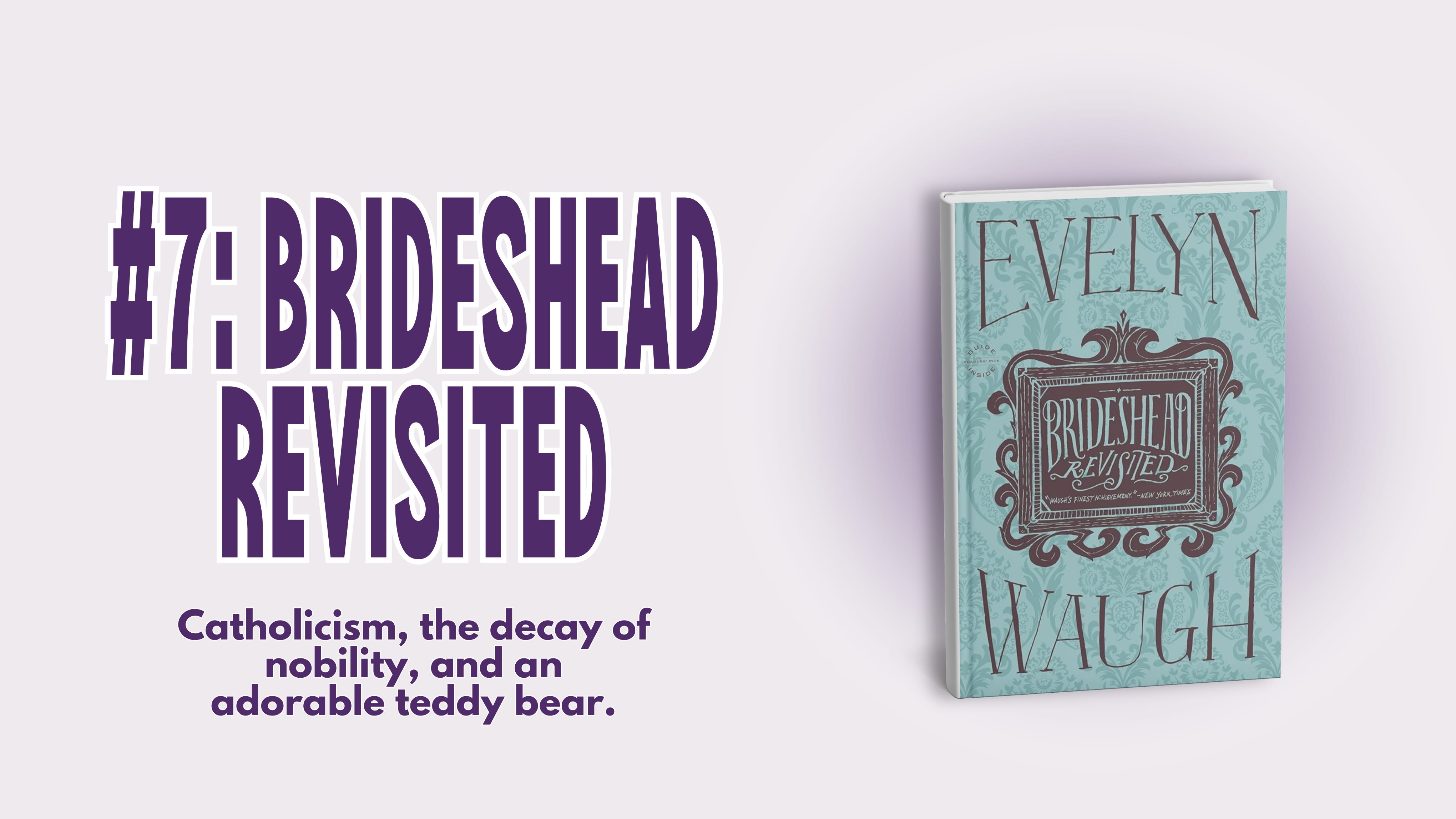
I originally picked up Brideshead Revisited because the book appears on virtually every single LGBTQI2AS+ reading list, and I was curious to learn about the depiction of homosexuality in literature before the ideological capture of the publishing industry. So I came into the novel expecting a hot love story between two young men, and instead I got a nostalgic depiction of the decline of the British nobility and a sharp foray into Catholicism. In fact, if I hadn’t been primed to read Sebastian and Charles’ relationship as homosexual, I would have likely glossed over that aspect of the novel entirely because it plays such a minor role in the book compared to its more important themes of faith and decay.
It’s a shame, really, that this book is often lumped in with such contemporary atrocities as A Little Life or The Song of Achilles because it really is much closer to the works of C.S. Lewis than anything we might think of today as LGBTQI2AS+ “literature.”
Oh, and don’t forget my favorite character—Sebastian’s teddy bear Aloysius.
6. The Unbearable Lightness of Being by Milan Kundera
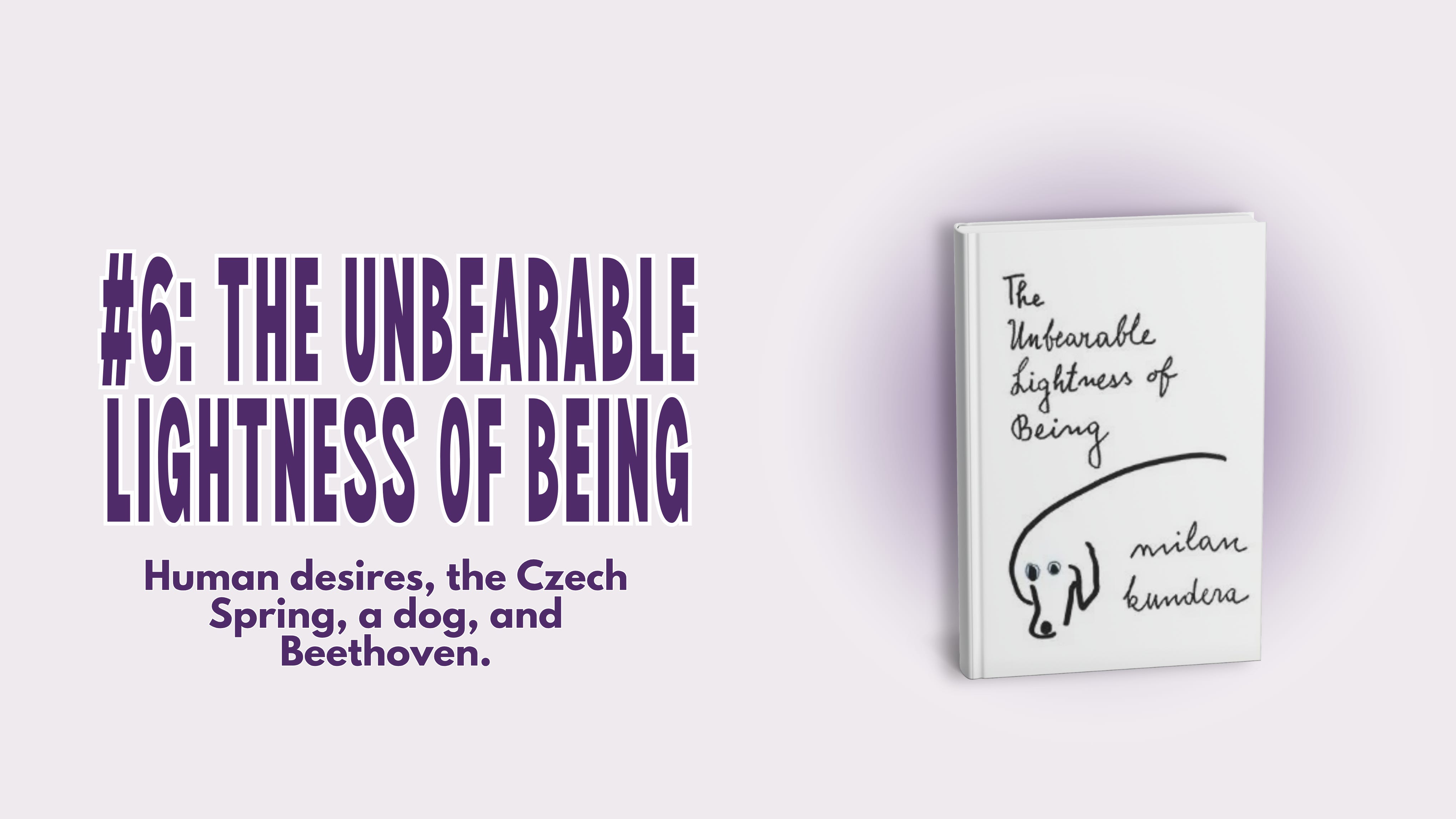
I discovered The Unbearable Lightness of Being relatively late in my life compared to many of the other books on this list. I read the majority of my top picks in high school or early college, but I only got around to Kundera a few years ago. Nevertheless, this one very quickly became one of my absolute favorites.
The novel is probably most famous for its depiction of polyamory and sexual freedom through the character of Tomas—who constantly sleeps around despite being in love with his supposed girlfriend Tereza—but what I love most about this book isn’t necessarily the romance plot but its use of classical music to explore human relationships. Like T.S. Eliot, whose Four Quartets were inspired by Beethoven’s string quartets, Kundera draws on Beethoven’s sixteenth string quartet to lay explore the novel’s philosophy on the fragile nature of human relationships. His allusion to Beethoven’s sixteenth string quartet inspired my own use of the piece in my novel The Leverkühn Quartet.
5. The Sun Also Rises by Ernest Hemingway
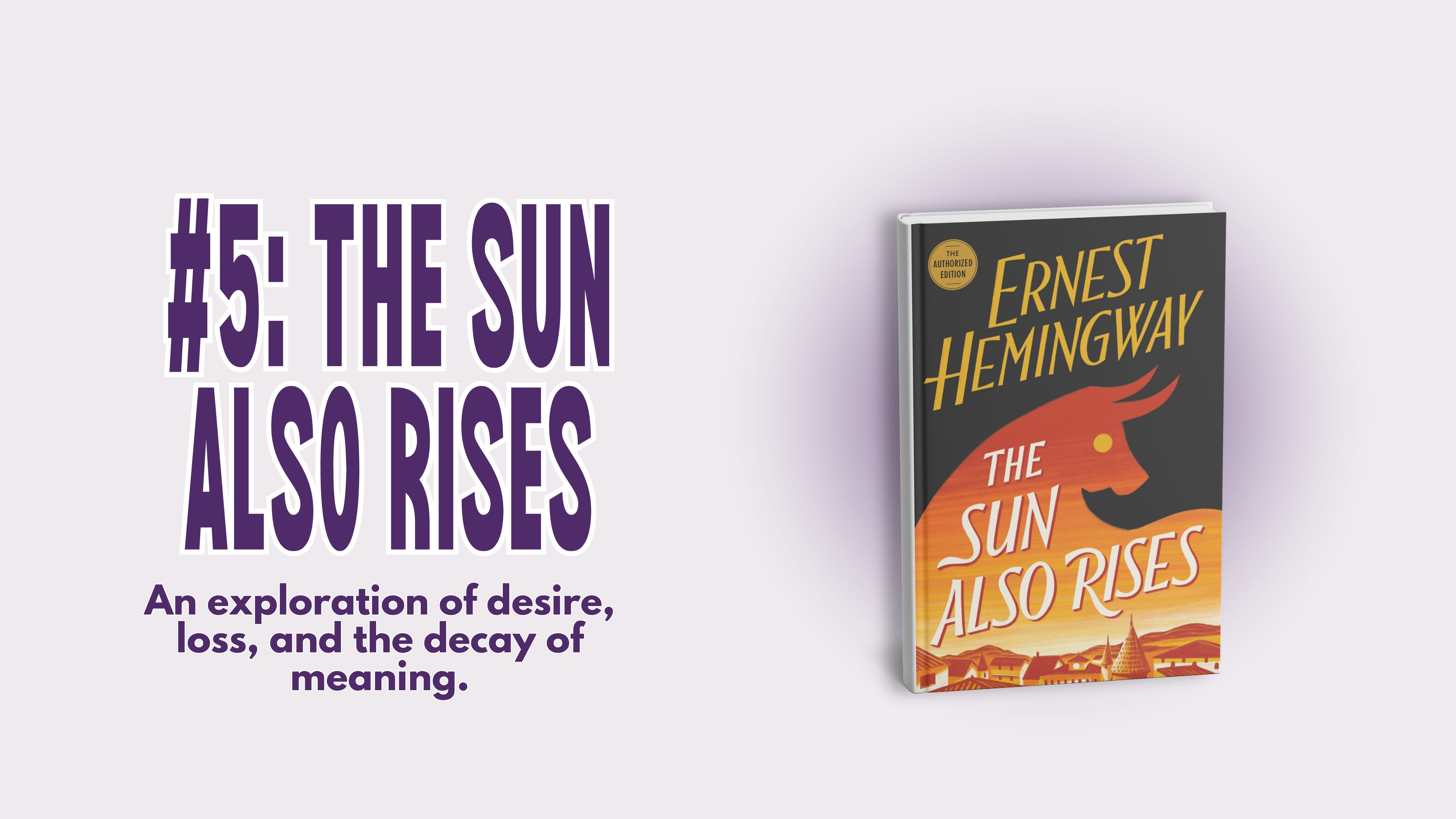
I have a love-hate relationship with Hemingway. The older I get, the more his minimalist style irritates me. To me, writing is a direct manifestation of the human soul, and Hemingway’s prose only flattens the full scope of the human mind—after all, we don’t think in short sentences and choppy phrases. That’s one of the reasons I love Faulkner so much—he masterfully captures the inner turmoil of the human mind.
But while Hemingway’s prose is far too flat and sterile for my liking, I still believe that he’s a master at capturing the decay of a particular societal moment, and his prose style admittedly works well for this particular novel.
The Sun Also Rises is a novel about the Lost Generation—a group of disillusioned expatriates searching for meaning in post-WWI Europe. Their grandiosity, however, is nothing more than a veneer for their mental sickness and inauthenticity. Hemingway’s writing is itself a metaphor for this emotional repression of his characters—they are not living their lives to the fullest, and the minimalist prose reflects that meaninglessness.
And Lady Brett Ashley is the coolest f*cking character ever invented.
4. The Master and Margarita by Mikhail Bulgakov
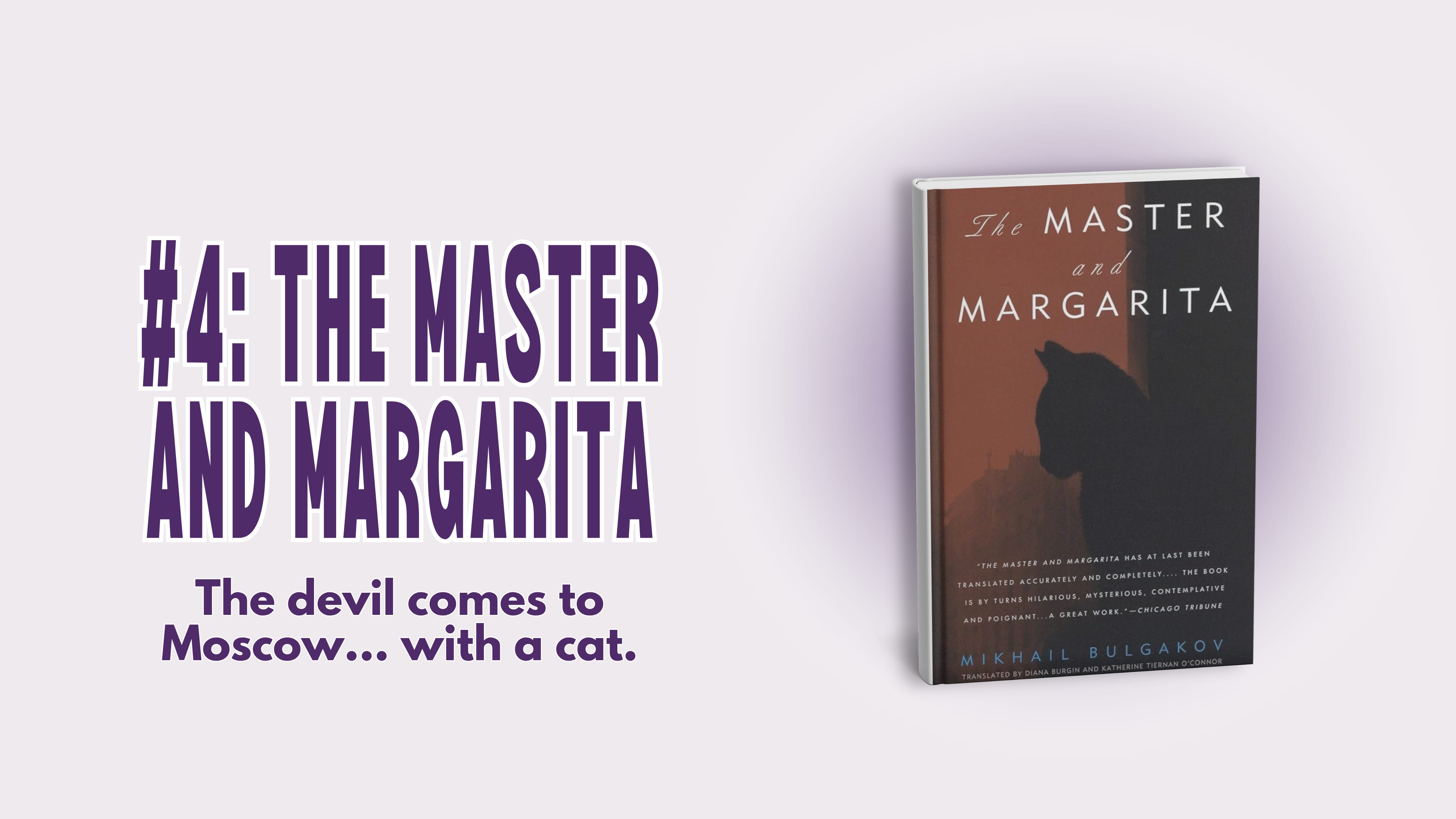
The Master and Margarita was actually the first novel I ever read fully in Russian when I was in the ninth grade. I originally picked it up because it inspired parts of Harry Potter, and I was immediately blown away. The experience kickstarted my love of Russian literature, and Bulgakov became my gateway to Dostoyevsky.
The Master and Margarita is a critique of the Soviet Union through a devil who roams the streets of Moscow and a cat named Behemoth (this detail is quite funny in Russian because “behemoth” is also our word for “hippo”). Coming from a Post-Soviet household, I resonate deeply with the novel’s commentary on decaying social norms in the Soviet Union, as well as its satire on Soviet life. There’s also a little bit of magical realism as we explore questions of spiritual guilt, morality, and redemption.
3. Pale Fire by Vladimir Nabokov
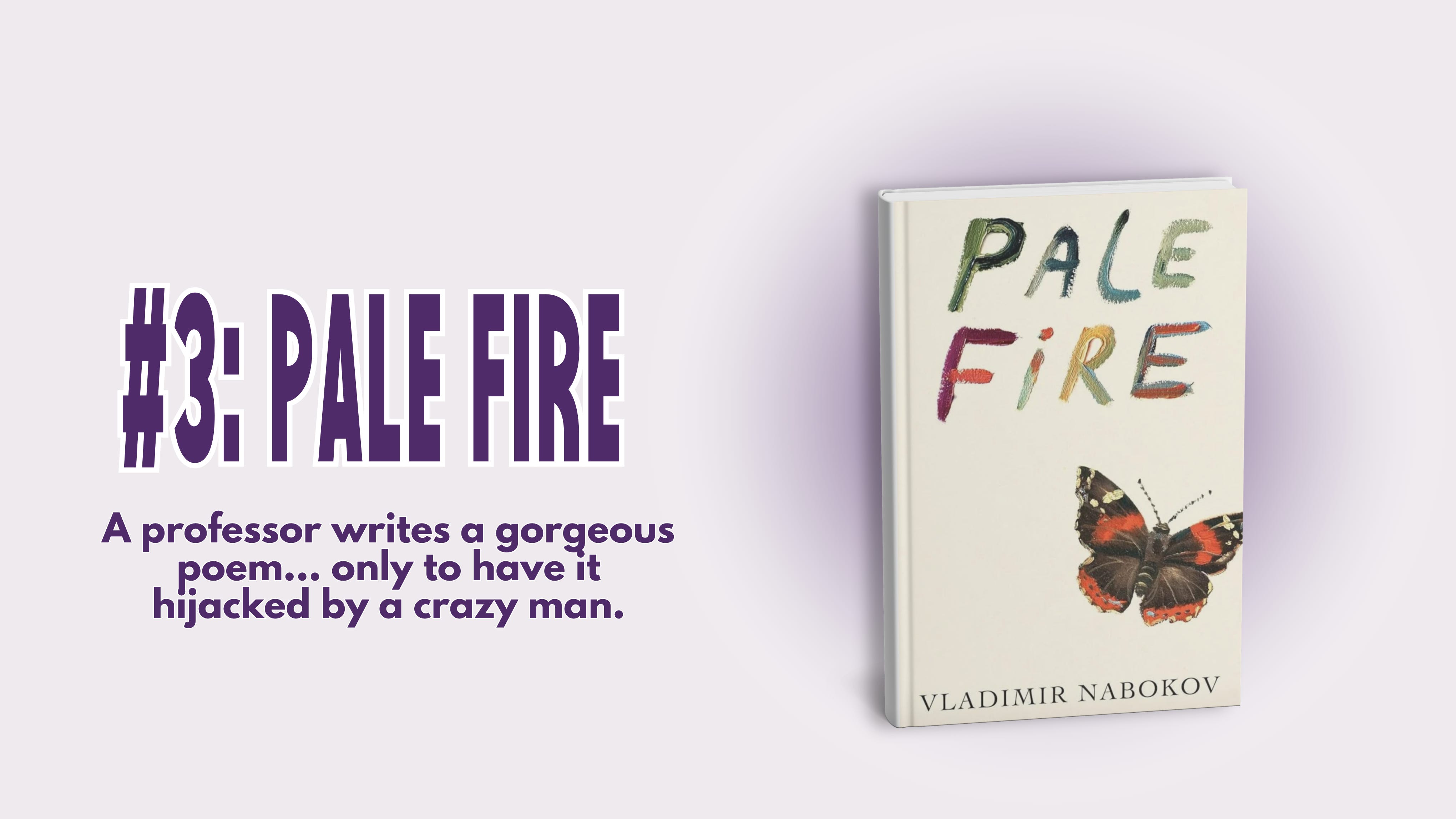
I was debating between Lolita and Pale Fire for this list, and I ended up picking Pale Fire because of its commentary on the absurdity of literary criticism in the academy (a topic that hits very close to home).
Pale Fire takes place shortly after the death of the renowned poet John Shade and is structured as a commentary on the last poem he left behind. The book starts off with a foreword to the poem written by Shade’s supposed friend—Professor Charles Kinbote—and then launches into a line-by-line analysis of Shade’s four cantos. As we soon start to realize, however, something isn’t quite right…
As someone who always complains about the ills of literary criticism in the academy, I think that Nabokov was very much onto something here.
Pale Fire also inspired my own exploration of the thin line between fantasy and reality in my most recent novel, Blue Snow.
2. The Sound and the Fury by William Faulkner
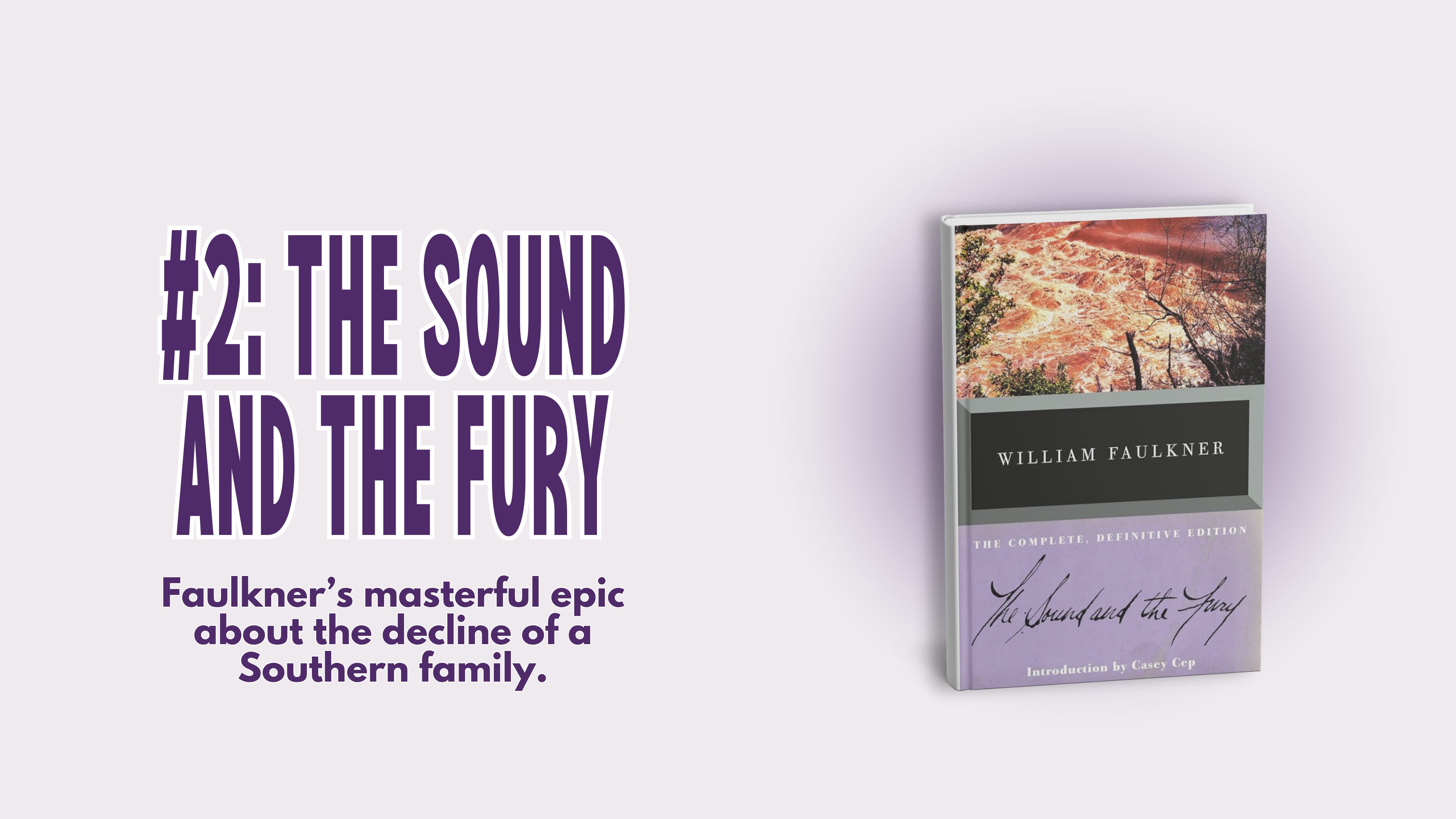
A year or two ago, I would have said that The Sound and the Fury is my favorite novel of all time, but I have demoted it to second place after revisiting the novel that took my first place spot. Nevertheless, it’s still my second favorite book of all time and deserves its time in the spotlight here on Pens and Poison.
The book’s title comes from Macbeth’s famous “Tomorrow and tomorrow and tomorrow” monologue and reflects the novel’s focus on the absurdity of life. It’s a difficult read, and for that reason, it’s not as widely read as some of the other books on this list. Nevertheless, I recommend it to anyone looking for a deep dive into human psychology.
The Sound and the Fury tells the story of the downfall of the Compson family through the perspective of three of the Compson family members and their longtime household servant Dilsey. My favorite section is narrated by the neurotic nineteen-year-old Quentin Compson, the first person in his family to go to Harvard. Caught up in the ideals of the old South, Quentin becomes obsessed with his little sister Caddy, and eventually meets a gloomy demise.
There’s a real-life plaque dedicated to him on the Anderson Memorial Bridge at Harvard. I spent an hour looking for it last time I was in Boston.

1. The Brothers Karamazov by Fyodor Dostoyevsky
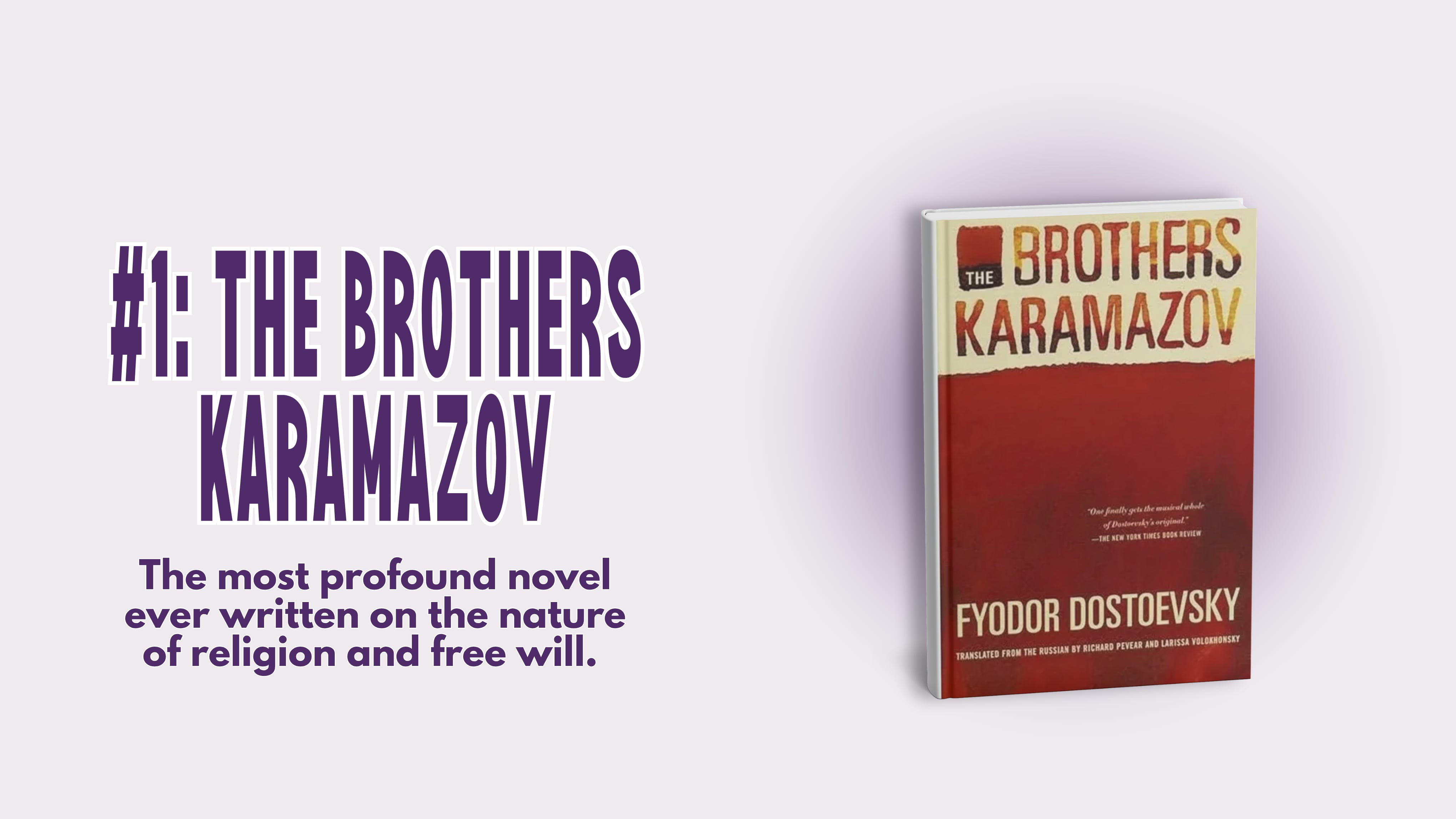
Over the past few years, I have come to the conclusion that The Brothers Karamazov is the greatest novel ever written—and I don’t think I’m alone in holding this opinion. In terms of its religious depth, philosophical complexity, and understanding of human nature, I don’t think that any other novel even comes close.
The three Karamazov brothers each represent radically different ways of approaching life: Alyosha is deeply spiritual and compassionate, Dmitri is impulsive and emotional, and Ivan is something of an intellectual skeptic. His “Grand Inquisitor” passage is perhaps the deepest meditation on religion ever to grace the page.
If you’d like to learn more about which translation to read, I’ve put together a nifty Dostoevsky translation guide here.
Wow, that was difficult, but there you have it—my top 10 books of all time. There are obviously so many other books that I cherish deeply, so don’t forget to follow along for more great books and curated reading lists.
What are your top 10 books of all time? Let me know in the comments and don’t forget to read The Brothers Karamazov as soon as you can.
Enjoyed this post? You can Buy Me a Coffee so that I’ll be awake for the next one. If you are a starving artist, you can also just follow me on Instagram, YouTube, or “X.”
Every reader's list would be idiosyncratic, a reflection of that person's taste. Mine includes:
F. Scott Fitzgerald, The Great Gatsby
Lady Murasaki, The Tale of Genji
The Pillow Book of Sei Shonagon
Herman Melville, The Confidence Man
Willa Cather, O Pioneers!
J.L. Carr, A Month in the Country
Chad Harbach, The Art of Fielding
Leo Tolstoy, War and Peace
Malcolm Lowry, Under the Volcano
Ralph Ellison, Invisible Man
My thoughts:
1) Parades End -Ford Maddox Ford
2) Life and Fate-Vasily Grossman
3) A Dance to the Music of Time- Anthony Powell