


Even if you’ve never picked up Melville’s Moby-Dick, you’ve probably encountered the image of Captain Ahab standing at the helm of the legendary Pequod, cursing the great white whale and vowing to take his revenge. Even if you’ve never read The Great Gatsby, you’re likely familiar with Gatsby’s elusive green light—and the hopes and dreams it represents. And even if you’re new to Shakespeare, you’ve probably seen our Danish prince standing in the graveyard with the skull of his old jester, lamenting the passage of time.
These images have become cultural icons in their own right, but they didn’t gain their notoriety by accident—they represent the pinnacles of some of literature’s most memorable characters.
But what makes them so memorable?
Take Ahab, for one. Melville’s great captain is the master of his ship while failing to gain mastery over his own self. Similarly, Gatsby reinvents his identity to renounce his past yet spends the entire novel obsessing over it. And, perhaps most famously, Hamlet vows to take revenge yet cannot act.
These characters are great precisely because of their many contradictions.
Today, however, you’d be hard-pressed to find a Hamlet or an Ahab—or even a character as seemingly mundane as Holden Caulfield.
In fact, closing the pages of a contemporary novel, you might remember the characters’ sexualities or national origins, but by the time you’ve finished breakfast the following morning, you won’t remember a single detail about the inner workings of their minds.
Because the moment that you close that final page, you cease to puzzle over them.
I’ve been wanting to write this essay for a long time now, but it sat on the back burner for a while because I couldn’t quite put my finger on why contemporary literature is so forgettable. I’ve diagnosed the uniform quality of its prose and the rampant politicization of the entire industry, but I could never understand why, just weeks after finishing a contemporary novel, I could never seem to remember a single detail about its characters.
I’ve previously ascribed this phenomenon to the fact that contemporary literature recycles the same archetype over and over again, and there is substantial evidence to support my diagnosis: the majority of contemporary authors are liberal white women who not only import their worldviews into their novels but also make no attempt to hide them. During the second chapter of Sally Rooney’s Normal People, for one, the male love interest Connell—a stand-in for Rooney’s obsession with class consciousness—literally hands his lover Marianne a copy of The Communist Manifesto. Rooney’s inclusion of such a scene not only reveals the sloppy nature of her characterization but also acts as an obnoxious exercise in political didacticism, creating an immediately recognizable Marxist revolutionary whose character depth ends at the mention of class struggle. Equally off-putting is Claire Caro Burke’s Natalie from everyone’s favorite TikTok hit Yesteryear, whose flaws I dissected here.
Relying more on navel-gazing than soul-searching, these authors only know how to produce the same sort of characters over and over again—the politically enlightened, emotionally self-aware young liberal—or how to attack the inversion of them.
But there is something else going on—and such political myopia is only one symptom of a much larger problem.
After a prolonged quest to pinpoint why contemporary literary characters feel so empty—and to acquire sufficient evidence to support my claims—I have finally unearthed some fascinating answers.
To illustrate the nature of my most recent “aha” moment, let us visit some of my recent interactions with publishing professionals.
As I understand it, my novels remain unpublished for the following three reasons:
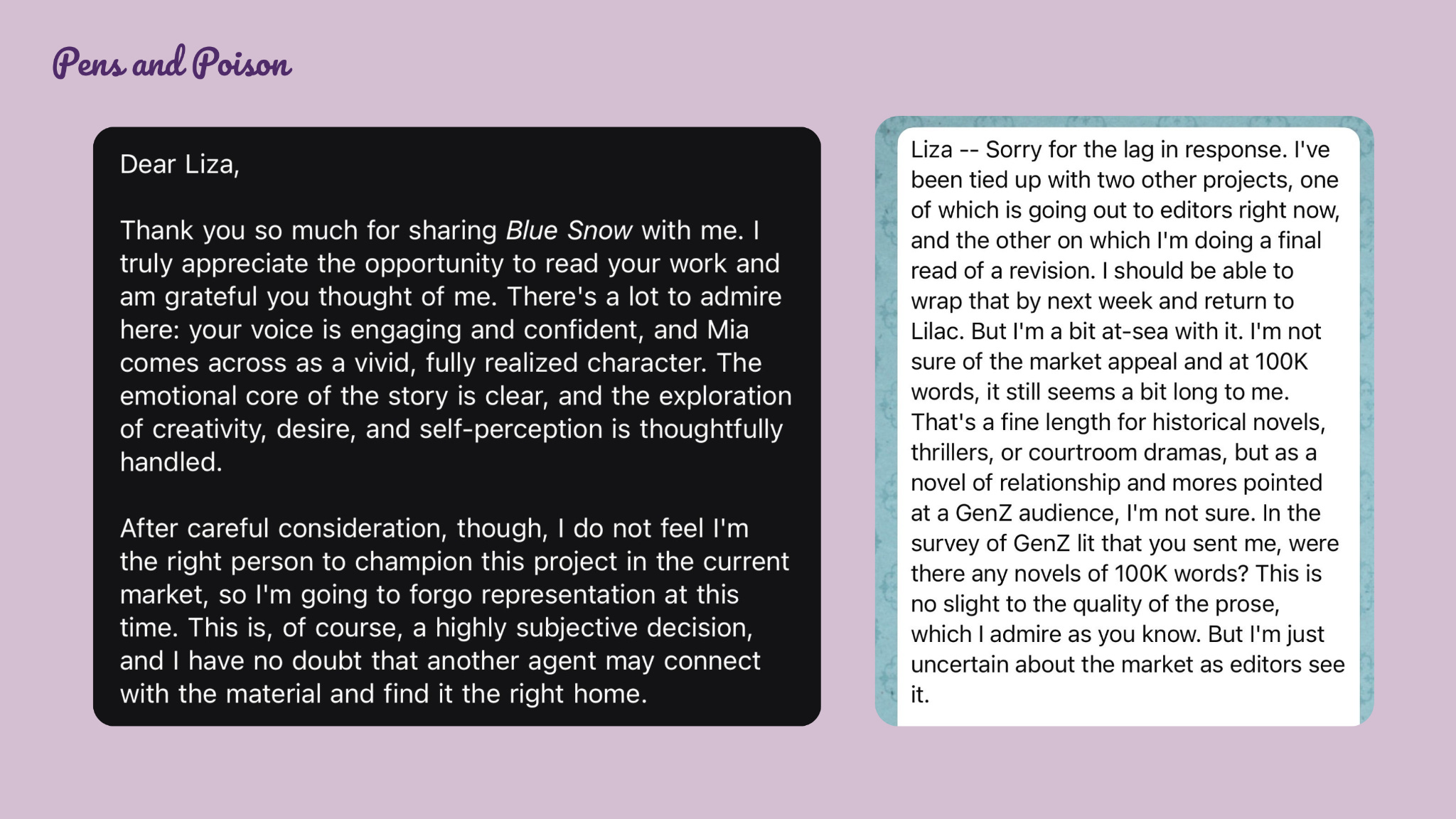
There is a perception among literary agents that there is no “market” for the sorts of slow, introspective literary novels that I write—or that if there is a market, it will be difficult to craft a pitch to appeal to an editor. These rejections frequently look like this:
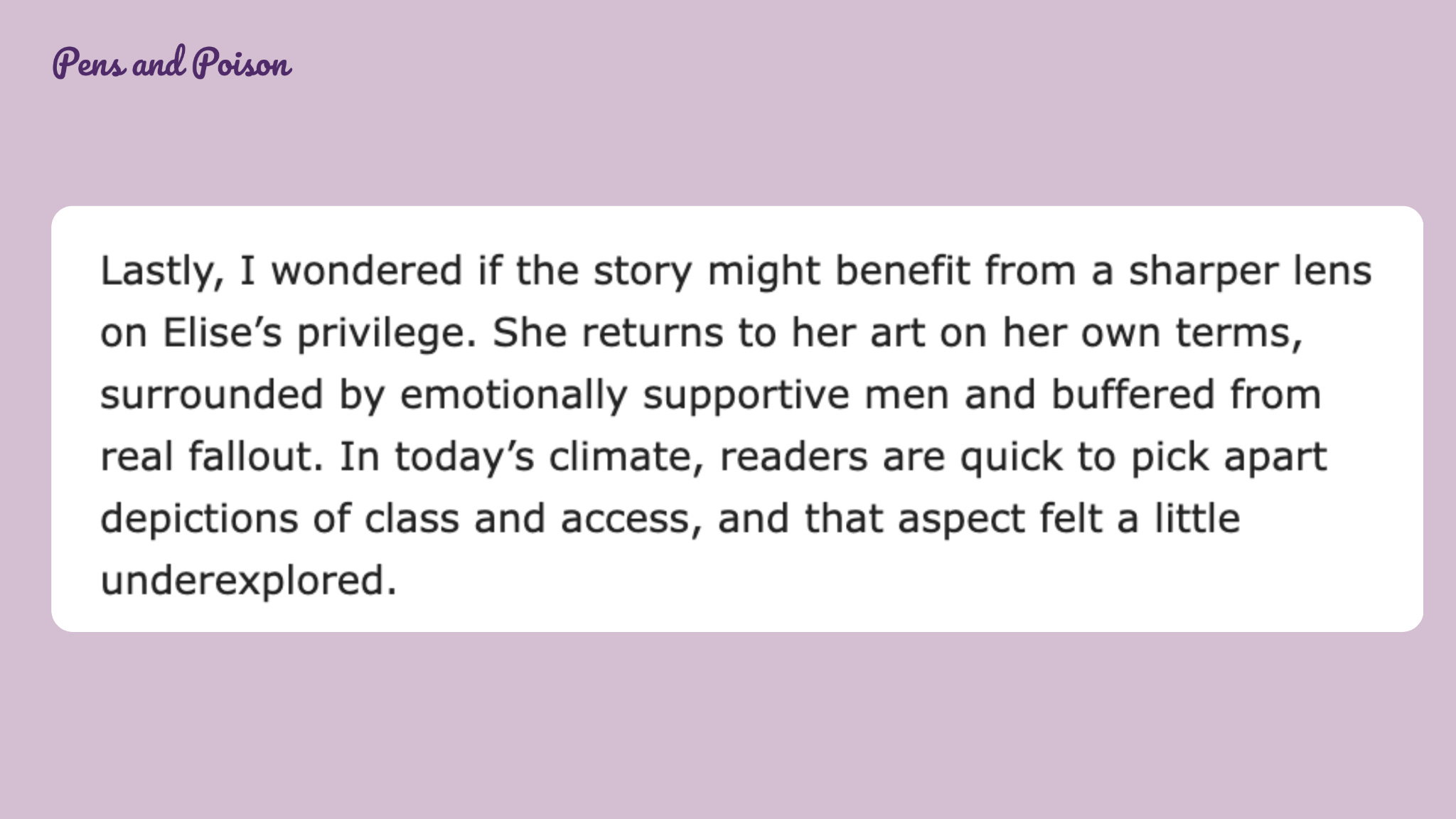
I do not espouse the correct political themes in my novels and am missing the leftist “secret sauce” that will make my books marketable in “today’s climate” (I have discussed this issue at length here). Such rejections frequently take the following form:
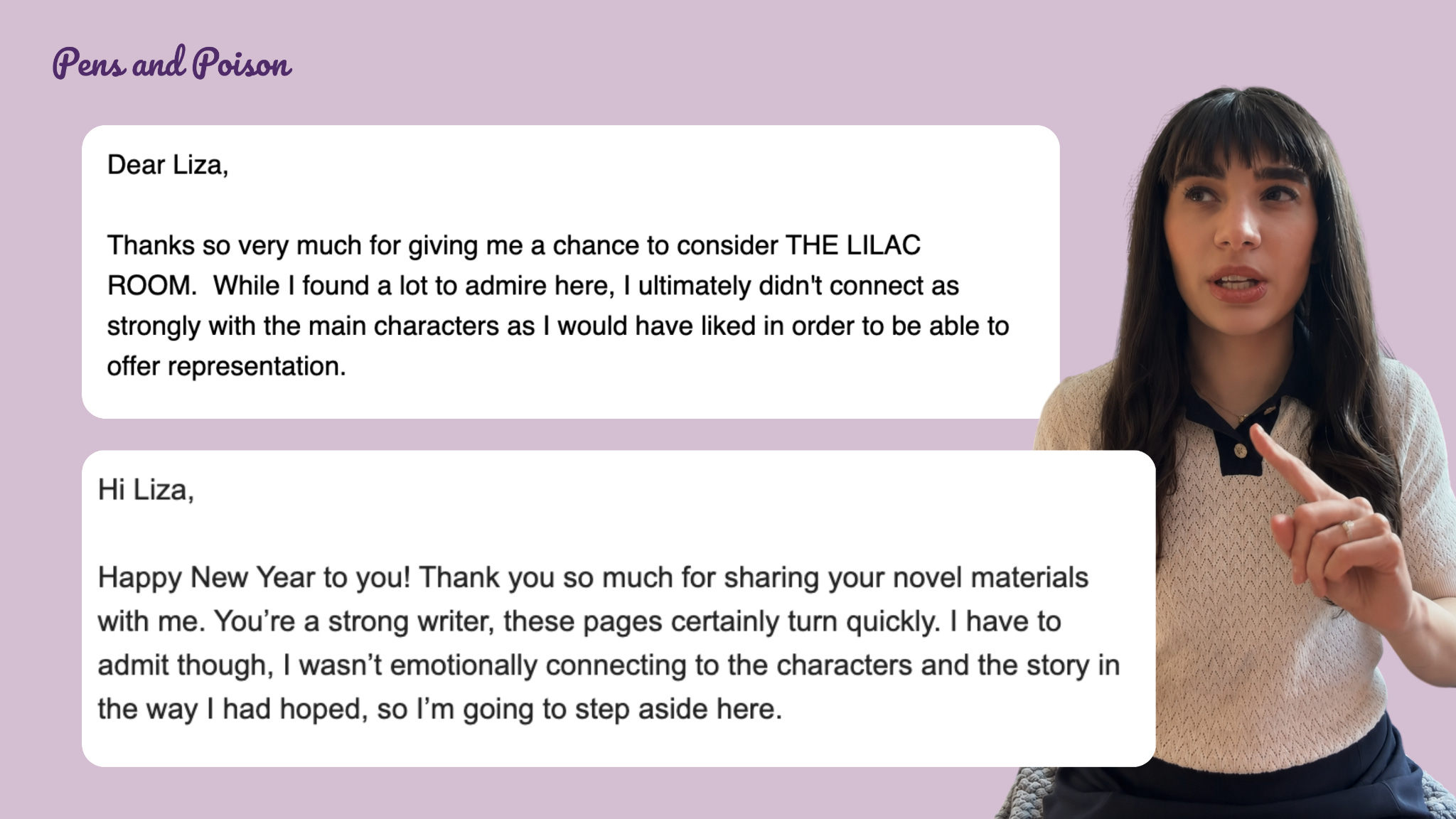
The sort of person who typically becomes a literary agent (liberal, white, young, woman) simply does not “connect” to the types of characters I write. These rejections usually read like this:
I can acknowledge marketability (or the perception of it), and I can even understand how an agent who has only ever been in one sort of social circle might reflexively demand a “depiction of privilege” in a literary novel. But “I didn’t connect with the characters” is not only a puzzling excuse but also one that is indicative of a larger, more insidious trend within our culture.
As serious readers, we do not necessarily read to “relate” to the great characters of the Western literary tradition—that would be juvenile, solipsistic, and, frankly, a waste of everyone’s time. Rather, we read to learn something about people who might think and act differently from ourselves. I cannot relate in the slightest, for example, to a man from two-hundred years ago who spends his life on a boat chasing a whale that’s torn his leg off, but I weep every time Ahab declares, “I’d strike the sun if it insulted me.” By the same token, I have little in common with a man who willingly murders two ladies with an axe just to prove a theory, but I sure as hell love living in Raskolnikov’s mind every time I choose to do so (more times than I’d like to admit).
In other words, I read to learn about the repulsive side of human nature or about worlds that differ from my own. I read because I want to learn everything there is to know about every sort of person on our planet—and no other great tradition has ever assembled a richer collection of human personalities.
Under the iron rule of “relatability,” however, books featuring abhorrent protagonists might never have made it onto our shelves—no literary agent would ever have “connected” with Humbert, nor would Alex from A Clockwork Orange have inspired much empathy in an acquisitions meeting.
The idea that a book is only worthwhile if one can “relate” to its characters stems from a culture obsessed with its own self—and results in a literary ecosystem whose characters all start to look, think, and act the same.
That culture is ours, yet up until last week, I lacked the vocabulary to properly diagnose it.
Up until last week, I didn’t know what it meant when a literary agent said she couldn’t “relate to my characters”—I assumed that my brainchildren simply surrounded themselves too frequently with “emotionally supportive men” (see point 2). But this past week, I finally got a sense of what’s going on behind the scenes—and I can finally explain why contemporary fiction feels so empty.
Let’s unpack it.